|
This page will act as a photographic journal. What I'm using, why I like various bits of kit, how I set up certain shots. Stuff that on the whole would act as a massive turn-off for anyone not interested in wildlife photography. Grasslands
April 21, 2013
•
Leave a Comment
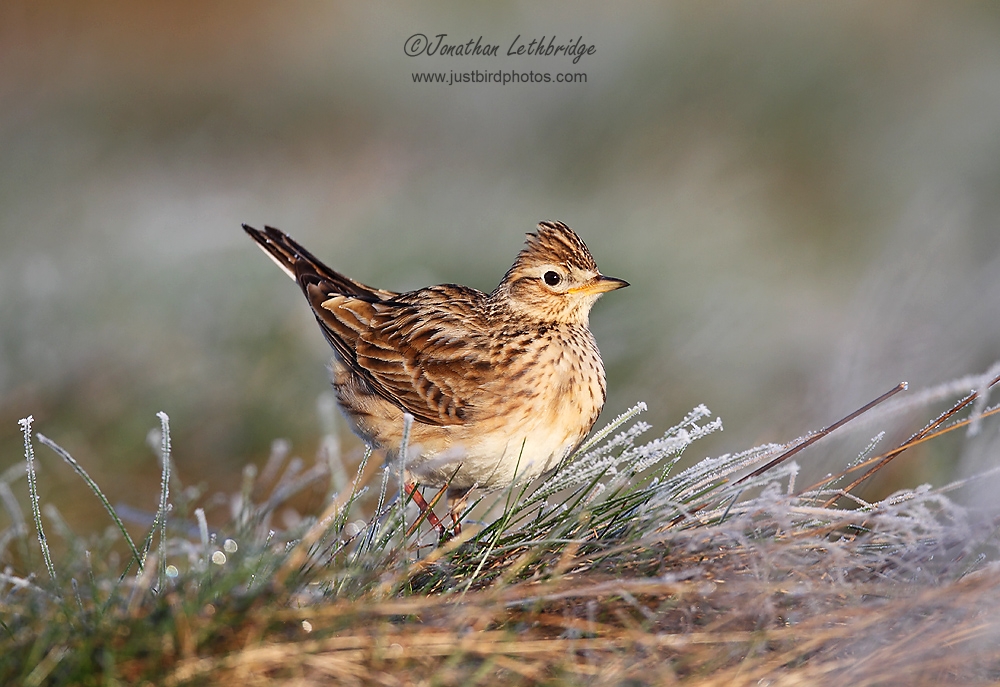
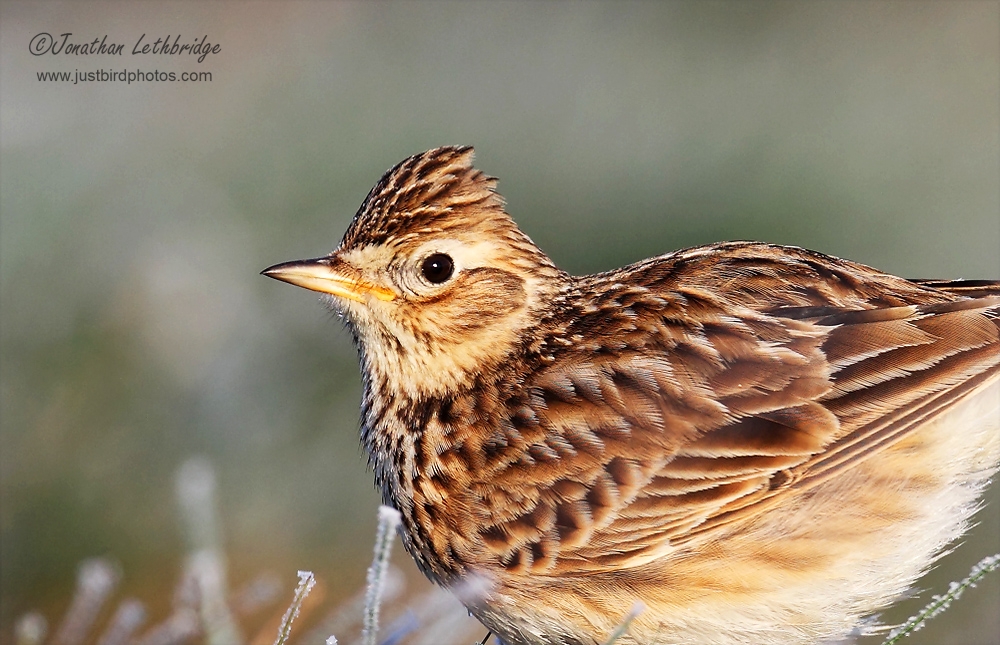
Wanstead Flats is my patch, and it rocks. Photographic opportunities tend to be limited as the site is massively disturbed, but I still try and get out when I can - birding principally. The last few days, on my walk to work, I've noticed a particular Skylark on a particular tussock. I've always been leaving at that point, and so had no time to try and get some images, so I was keen for the weekend to come along. 6am and Saturday dawned nice and bright, with lovely early morning light. Sure enough, the Skylark was on the tussock. The reason I've been interested in this tussock is that it is near one of the paths, and so I don't have any need to walk on the nesting area - I spent half my life telling people to get the hell off it, so it would be pretty low of me to then go and do exactly the same thing. The path runs east to west, and so I also had the light behind me - simply the ideal tussock - that it should be favoured by a bird over and above a stack of others is pure luck. I decided to go with the 800mm - much as I am really enjoying the new 500mm, the reach of the longer lens means it retains it's top dog spot, and when small birds are involved it's the one to go to - tripod mounted on a Wimberley head - no mucking about this morning, I'd been planning this for three days! It justified me keeping it, the difference between 500 and 800 is massive. Even when you stick the converter on the 500, it's still a pretty big difference. And, as you will see, it takes the 1.4x pretty well itself, to leave all other lenses in it's wake! Rumour has it that the new 600mm plus the the 2x is a pretty awesome combination, but I suspect it's pretty difficult to get right. As I approached with the sun behind me, the Skylark got up - almost inevitable I suppose, but I high hopes that it would come back. I positioned myself pretty close, perhaps 20 feet away, in other words just outside of minimum focus. And come back it did, and not just to perch on the tussock, but to actually display and sing on it. They do this more often than you might think, and I've always hoped to catch it. For whatever reason I've never spent much time with my local Skylarks, but a few images by Rich Steel a couple of weeks ago inspired me to give them some time.
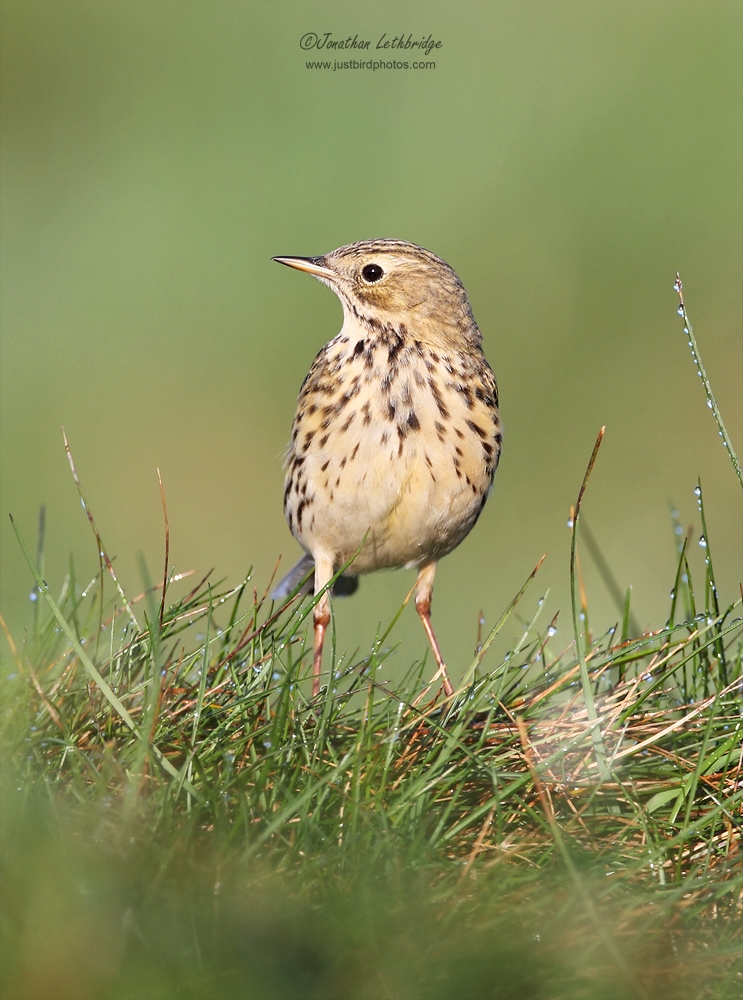
As I was photographing the Skylark, I couldn't help but notice a couple of Meadow pipits returning to a different tussock. So when I was done with the Skylark, I moved on to them. I found I couldn't get quite as close, so turned to the converter to help me out. A quick rebalance of the newly changed setup on the Wimberley, and I was good to go - important that you do this if you have one of these, you always want your kit properly balanced. I have cut a little notch into the Arca plate (actually a replacement foot incorporating the Arca dovetail) which shows me exactly where the lens needs to sit in order to be spot on. I've done the same thing on the head itself, cut a notch on the pillar that the platform slides up and down on. This cuts out trial and error and allows me to get set up perfectly time and again, with no full and in about 20 seconds. I don't have a second notch cut for when I attach the converter, but you just need to slide the lens forward by about a centimetre. Most of the following images are with the 800mm and converter, giving a whopping 1120mm, plus the crop factor of the camera - somewhere close to 1500mm. Makes a mere 500mm seem pretty wide angle! Anyway, a lovely session in some excellent light, and I rattled off quite a few frames. Amazingly by 9am I was struggling with heat haze!
Window Blue Tit
April 19, 2013
•
1 Comment
I work from home fairly frequently, and just outside my window a Blue Tit has been singing. It seems not to notice when I open the window, so in short breaks between meetings I've been seeing if I can get a few shots of it. Generally it chooses relatively tangled perches, or rather perches where the background is a real mess, but with a bit of contortionism I can sometimes get a cleaner view. The orangey background in some of the following images is in fact the brick wall of a house on the other side of the road. I've been hand-holding the lens as there is no room to set up a tripod, and I have to say I'm dead impressed with how well the 500mm Mk II performs - it's razor sharp! I may need to think about reworking some of my photoshop actions to apply less sharpening to files as I don't want them to look overdone - this is not normally an issue for me! It's a bit funny really, as up until this year I'd never really taken many photos of Blue Tits, but I have to say they're incredibly charismatic little birds and at the moment I can't get enough of them. Just wish I didn't have as many meetings!
Kittiwake, Wanstead Flats
April 14, 2013
•
Leave a Comment
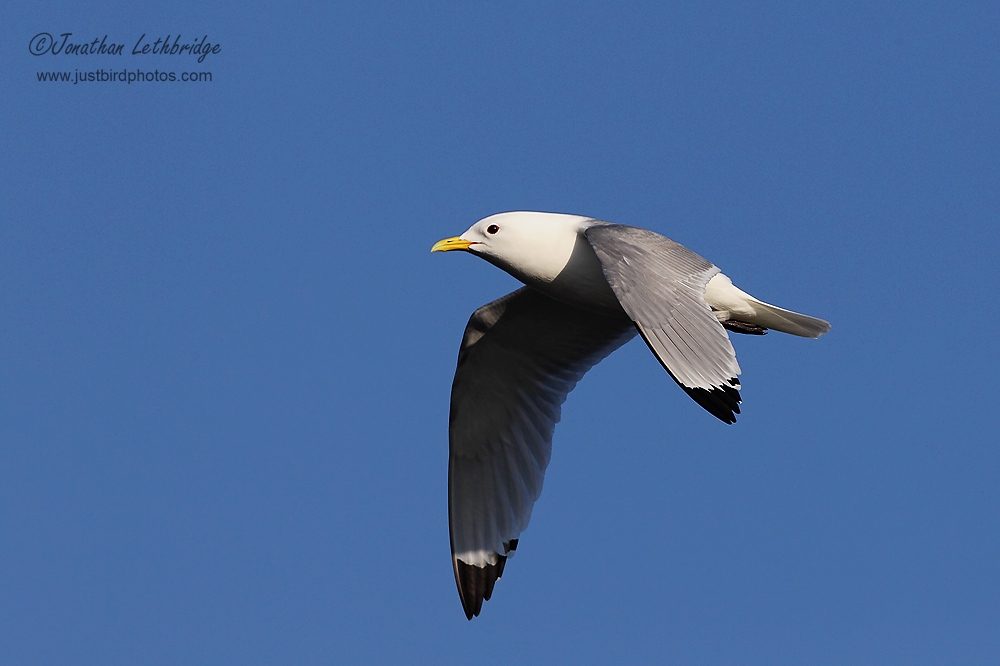
It had been a relatively quiet morning up until about half eight, nothing untoward at all. My first Blackcap of the year in song, causing my brain to momentarily overload given I've not heard the song for months, and also my first Willow Warbler. What I wasn't expecting was an adult Kittiwake to cruise over my head and then start cirling Alexandra Lake really slowly, but that is exactly what happened! The first I knew of it I was looking up at a medium-sized gull that had jet black legs. The period of recognition was petty quick despite the strange circumstances, and after a quick confirmation of the bill and eye I was jumping up and down! First job was to get the teleconverter off the lens as I'd been using it for small birds, and then get dialled in for manual exposure - changing background, changing distance between me and the bird, i.e. changing amount of white in the frame. I ended up on 1/2000s-1/2500s, and f6.3-f8.0. I had started off at 1/1600s, but soon got up to the slightly faster speed. Luckily I had all the time in the world as the bird just glided back and forth. Normally I see Kittiwake on remote scottish archipelagos, so to get one in suburban London was brilliant! All with 1D Mark IV and 500mm f4 IS Mark II, hand-held.
Blackbird
April 14, 2013
•
Leave a Comment
This is just a grab shot with the 500mm mounted on a monopod, but I have to say I'm pretty pleased with the result - 1/250th at f4, ISO 800. This was early morning in pretty mucky light, and yet I got away with it. I reckon my monopod is just about the most useful piece of non-electronic gear that I own, and I never travel without it - always in hand luggage. If my suitcase is delayed, I'm still good to go, and half the time I use it in preference to a tripod anyway, as the greater mobility is a real asset. If you're in the market for one but are not sure it's for you, I can recommend the Manfrotto 680B as a cheap, excellent and nigh on indestructible bit of kit. If you're a believer already, don't mind shelling out, and want something more compact and yet utterly rock solid, the Gitzo 5561T is absolutely brilliant.
Canon 800mm + 1.4x converter
April 13, 2013
•
Leave a Comment
I've just been looking through a few images from last year, and decided that this one is worth pulling. It was taken with the Canon 800mm f5.6 IS lens, with the 1.4x Mk III converter mounted, for an amazing 1120mm of focal length. Even more amazing is that this was with just a monopod, and yet the sharpness is all there. I've recently been using my 500mm much more, but today I picked up the 800mm as my target was small and likely to be skittish. I never found the bird, but whilst having a go at other things I was reminded quite how much magnification 1120mm actually is, and quite how viable a combination the 800mm with a converter actually is. Now that I use a tripod and full gimbal head practically all the time, I wonder if this might be a set-up I use frequently to get large in-the-frame images of passerines out on Wanstead Flats, which is where I took this Wheatear.
|