|
This page will act as a photographic journal. What I'm using, why I like various bits of kit, how I set up certain shots. Stuff that on the whole would act as a massive turn-off for anyone not interested in wildlife photography. Buff-bellied Pipit in London
December 15, 2012
•
1 Comment
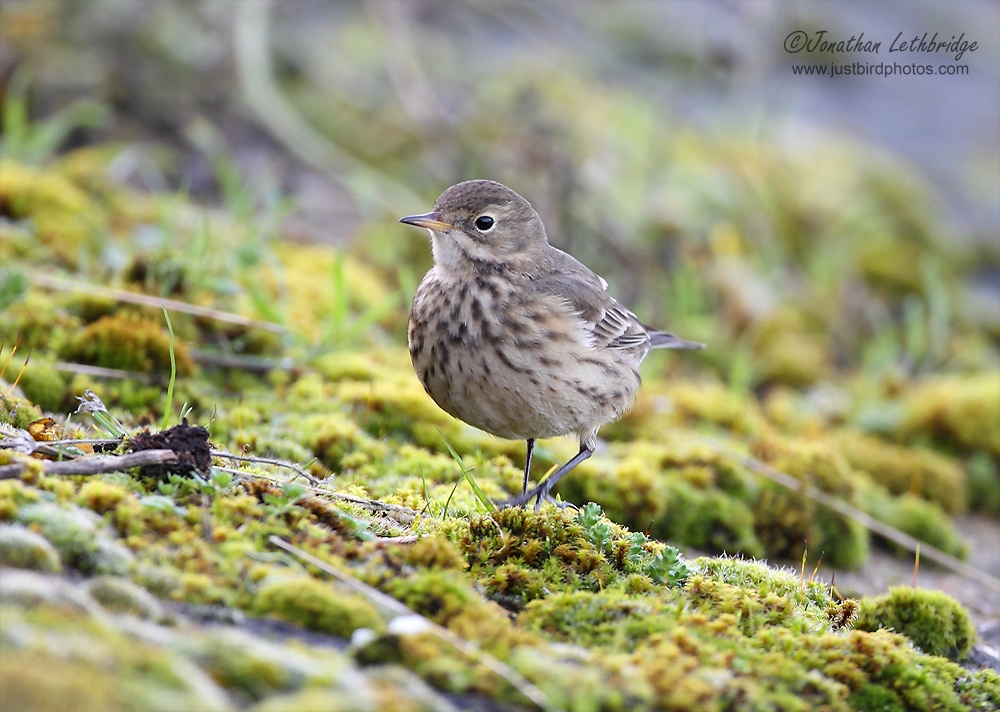
A few from this morning's Buff-bellied Pipit in the far west of what counts for London in terms of listing, right on the boundary of the LNHS recording area. The first for the London, and even though I knew it would be very busy, I had to go - glad I did though. Despite a close subject, very tough photography with the bird in complete shade, below a low wall that you couldn't go over, and with millions of people all trying to do the same as me! Managed a few decent ones, but the hit rate was very very low. Used the 1D4 and 800mm, what a fabulous combo - I am very lucky. The length of the lens really helped negate the shooting angle that shorter lenses were forced to use and still get a decent image size - at that point 300mm lenses were right on top of the bird. My minimum focus of 6m forces better composition. ISO mostly in the 1000-1250 range, and shutter speeds on the low side for handheld, at around 1/400s - I suppose the image stabiliser really comes into its own in these situations, but it can't do anything about a bird that rarely stays still. Here are the best of the bunch.
No IS, and hey-presto, flight shots that are not complete crap!
December 09, 2012
•
Leave a Comment
A couple of people have said that if you turn off IS (image stabilisation), then your flight photos will improve. The rationale - I think - for this, is that IS takes a fraction of a second to kick in, and thus the camera focuses slower. Actually I have no idea, but I had a go today at some Gulls on a Suffolk beach, and in doing so walked away with some keepers, which doesn't usually happen! Perhaps it was because I using a smaller lens which was easier to handle - it was always said that the best flight lens was the old 400 f5.6 telephoto, a lens which has no IS funnily enough.... I used something similar, which was the Canon 300 f2.8 with the 1.4x converter - a combination which clearly focuses quickly enough for gulls. I reckon that with practice I could get quite good, and there are plenty of Gulls here in Wanstead to have a go at.
Friendly Turnstones
December 08, 2012
•
1 Comment
Our hotel in Tobago was right on the beach, and had a small flock of resident Turnstones that would regularly run up and down the sand. If they spotted somebody eating something, they came right up to you at your hotel room - they filled the Pigeon niche! They're one of my favourite waders, and their boldness allowed me to take a few shots with a short telephoto, but also at times with a macro lens - the first shot, which is possibly my favourite of all of them, was taken with Canon's sensational 100mm f2.8 IS macro lens - this lightweight lens is a steal for the price, and brilliantly versatile too, for instance it's a wonderful portrait lens. All the beach shots were taken with the handheld 300 f2.8 IS, not so much of a steal sadly, but a lens that hardly ever gets used as I always have the longer one on me - 300mm is simply too short for the majority of bird photography in this country. I rented it for several years, and when I finally got it back I considered selling it, but I found it such a pleasure to use whilst away that I'm keeping it for a little while longer, if only for travel. Paired with the 5D Mark III body, this makes a top class and pretty light travel set-up. The final image was taken with the tripod-mounted 800mm, legs splayed out on the jetty to get to the eye-level of the bird - a hugely beneficial technique that makes bird photos just pop. Not always possible, but I see so many photos that could have been dramtically and easily improved if the photographer had simply crouched down rather than remained standing with the lens angled down. Get down low, even if you get wet - easier when on a beach in the Caribbean for sure! You can get caught out though - I remember kneeling in dog muck on the beach at Southend-on-Sea one winter......Turnstones were the target then too!
Hummingbirds
November 29, 2012
•
Leave a Comment
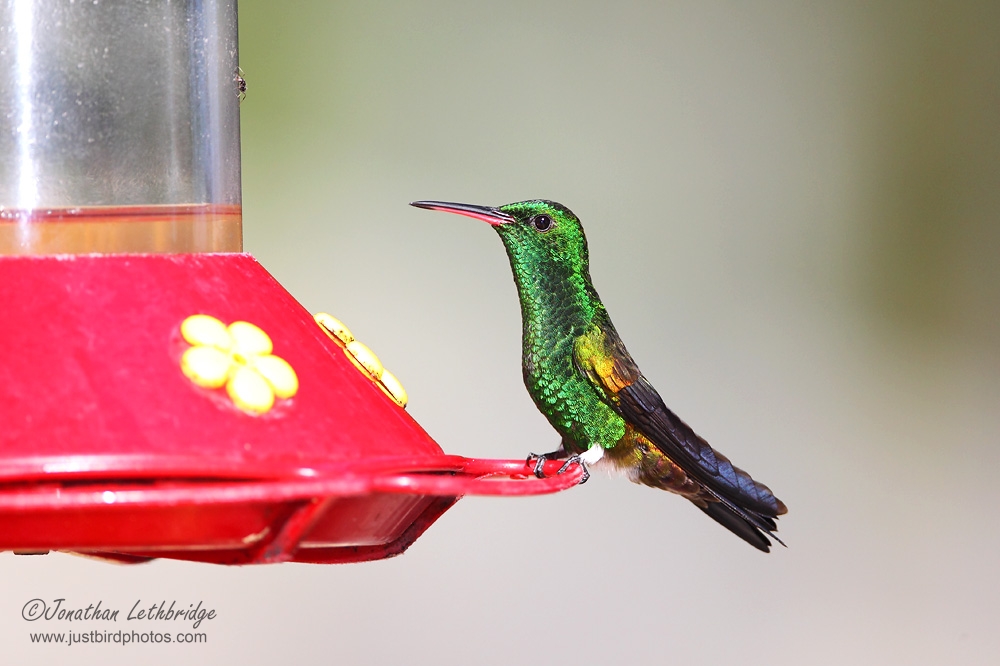
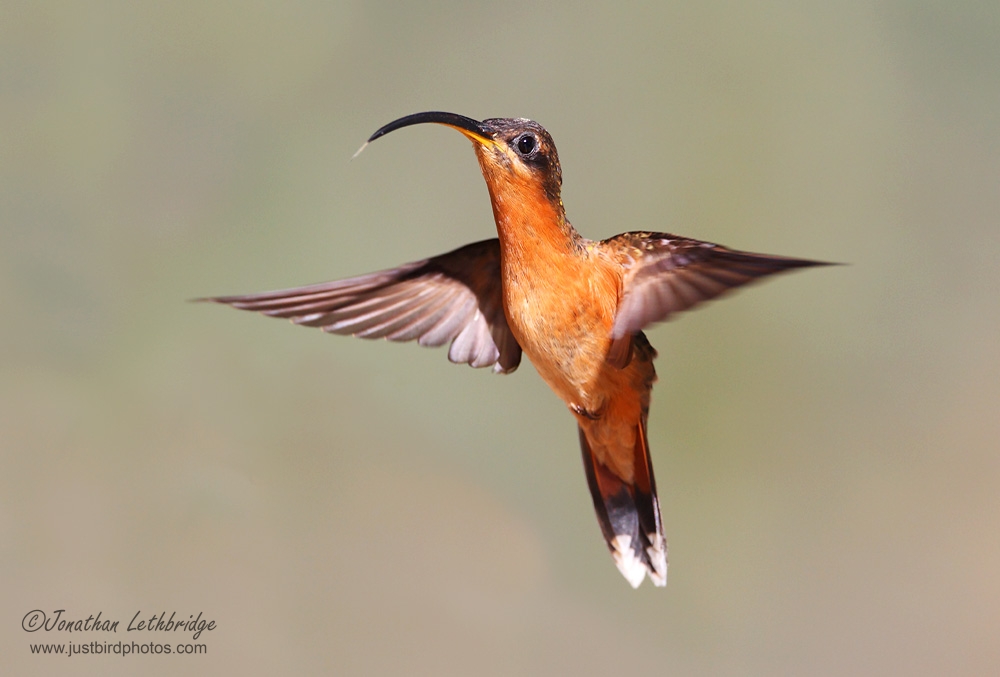
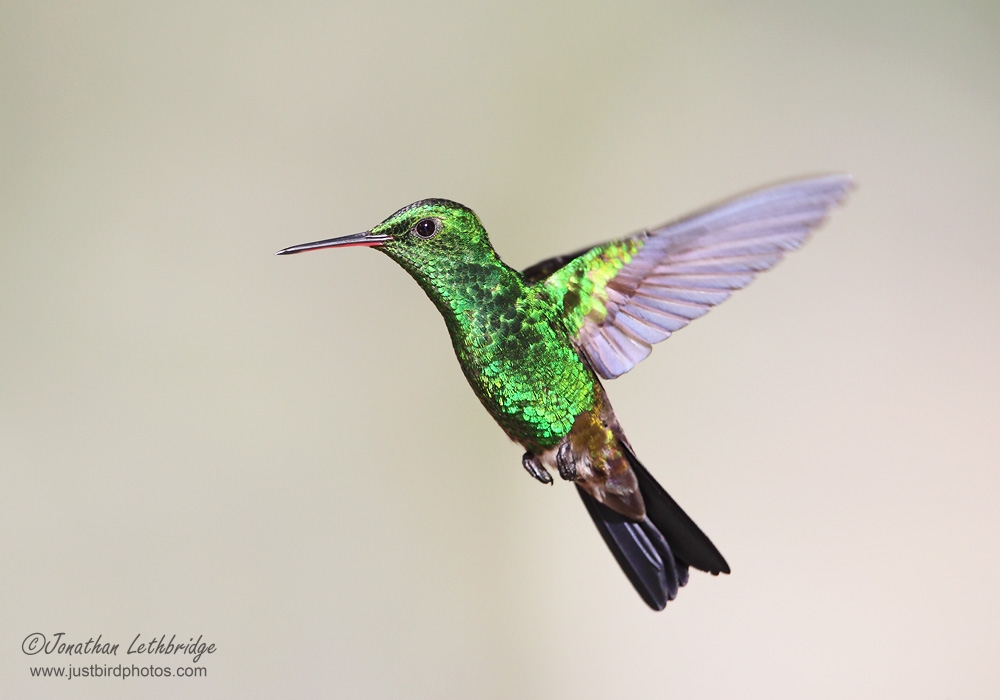
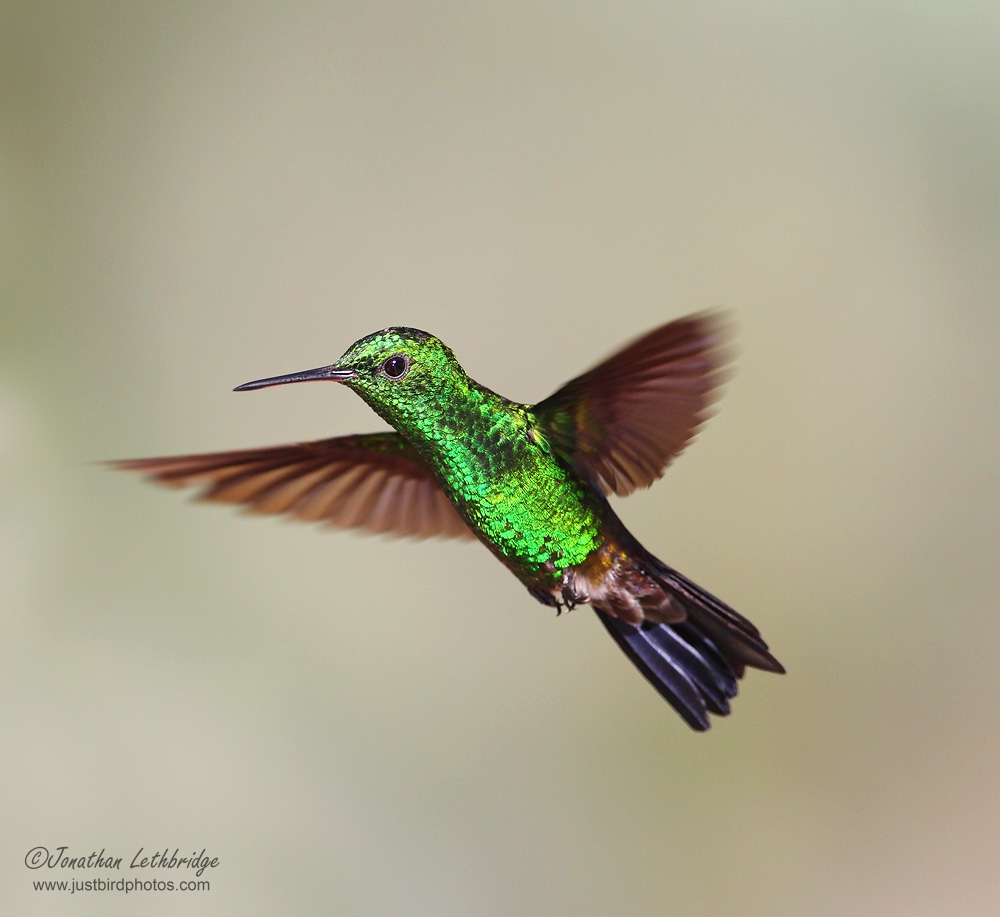
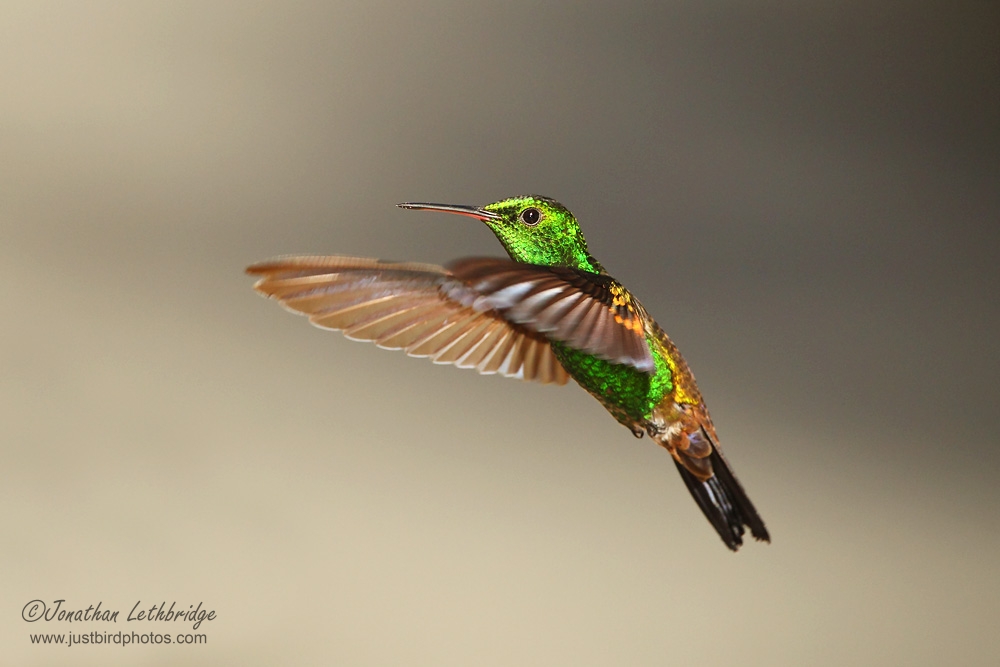
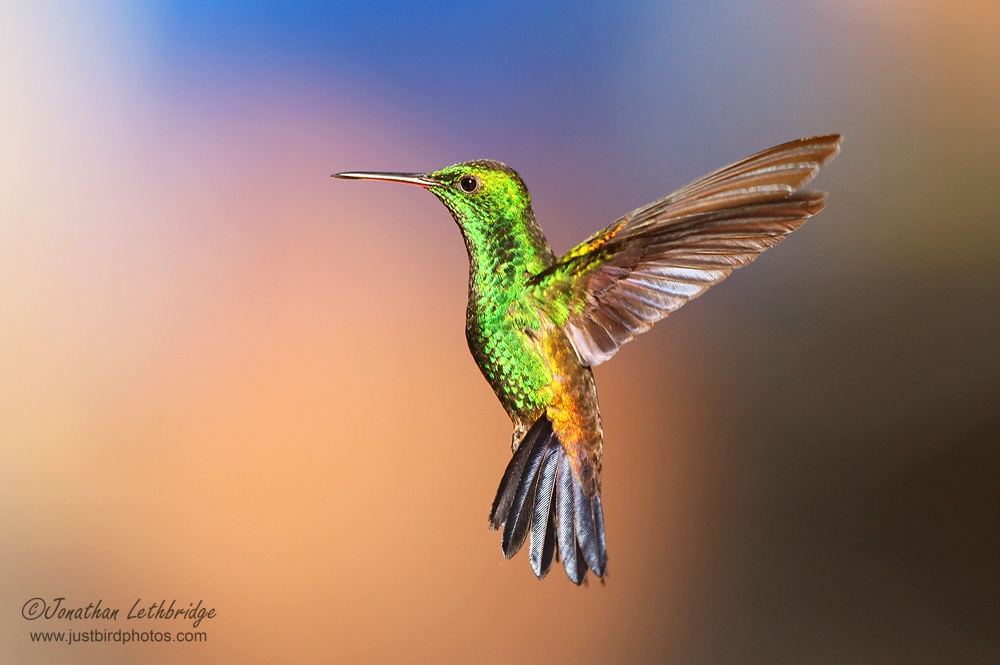
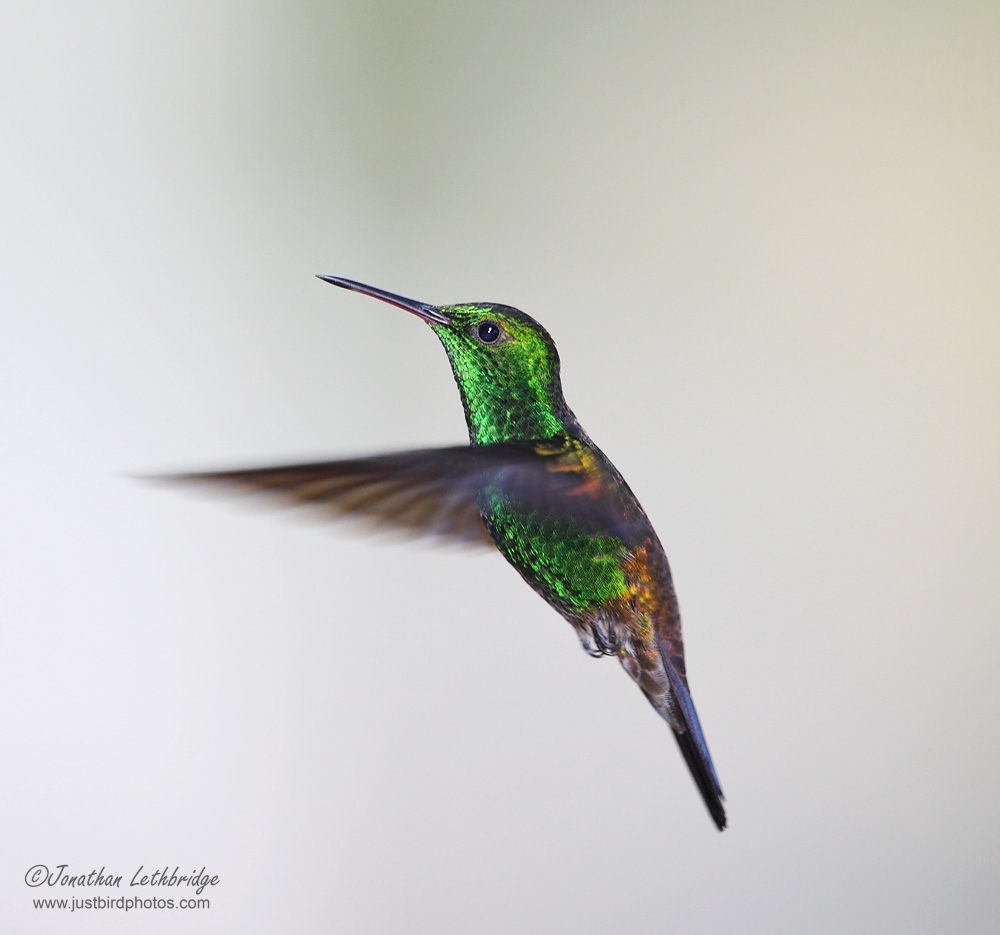
I have never had the opportunity to photograph Hummingbirds before, so when I arrived at the Blue Waters Inn on Tobago I was delighted to find Hummingbird feeders right outside my room - basically a standard RSPB style feeder with perches, but rather than peanuts and wire, a sugar solution in a plastic bottle with drinking holes. In an ideal world there would have been Heliconias and other amazing tropical plants, and indeed this is what pro Hummingbird photographers will use, but with birds almost constantly at the feeders, I was more than happy simply to try and get the birds on film. It was very difficult; the following images are the best out of many hundreds. Most were blurry, many didn't feature birds at all and were just empty air. Anyone that thinks that having top drawer kit makes such photos routinely possible should think again. I have not sworn as much for a very long time - the birds move like you would not believe - the successful images were almost always where the Hummingbird hovered for more than a split second and I was actually able to achieve focus and fire off a few frames - and bear in mind that as I was using flash, albeit a single flash - the recycle time was such that only the first frame in a sequence was likely to be any good. So, if you read this post on my birding blog, you'll see that I finally discovered how flash photography works. You can see how this would be ideal for Hummingbird photography. In a nutshell, the genius Hummingbird photographers will set up a scene with a nice flower, and all around it set up multiple flashes on dedicated stands, including one specifically to light the background. They'll shoot entirely on manual, with a deep depth of field, an evenly lit bird, and a flash-induced shutter speed into the realms of 1/20,000th of a second. They still have to achieve critical focus (and I'd like to think they find it as hard as I did!) but essentially that's the only hard part. If the manual exposures are dialled in correctly for the distance, the bird will be perfectly frozen and perfectly lit, with a fabulously lit OOF background. Not easy by any means, but at least possible. I only discovered how flash output power is actually flash output length at the end of my stay, and with only one flash I found that my minimum working distance just wasn't enough to light the bird purely with flash as I wanted. I got all sorts of ghosting if I allowed ambient light to influence the scene, and a darkish image if I didn't.
Here's what I did instead. I set up my tripod at the minimum focussing distance for my lens from the feeder, about six metres. I mounted the 800mm lens on the Wimberley Sidekick, and using a multi-jointed macro arm (that I once dreamt of using for amazing macro photos but never in fact used), positioned the 580 EX II about 20cm above the lens axis using a flash extension cord - i.e. the flash does not sit atop the camera, but rather by itself above the lens. Having the light source in a slightly different plane from the lens eliminates red-eye - yes birds get red-eye too! I used a Better Beamer to better align the flash output to the focal length as most flashes top out at around 100mm - another piece of previously redundant kit that has finally proved its worth - all photographers have heaps of unused gear lying around....
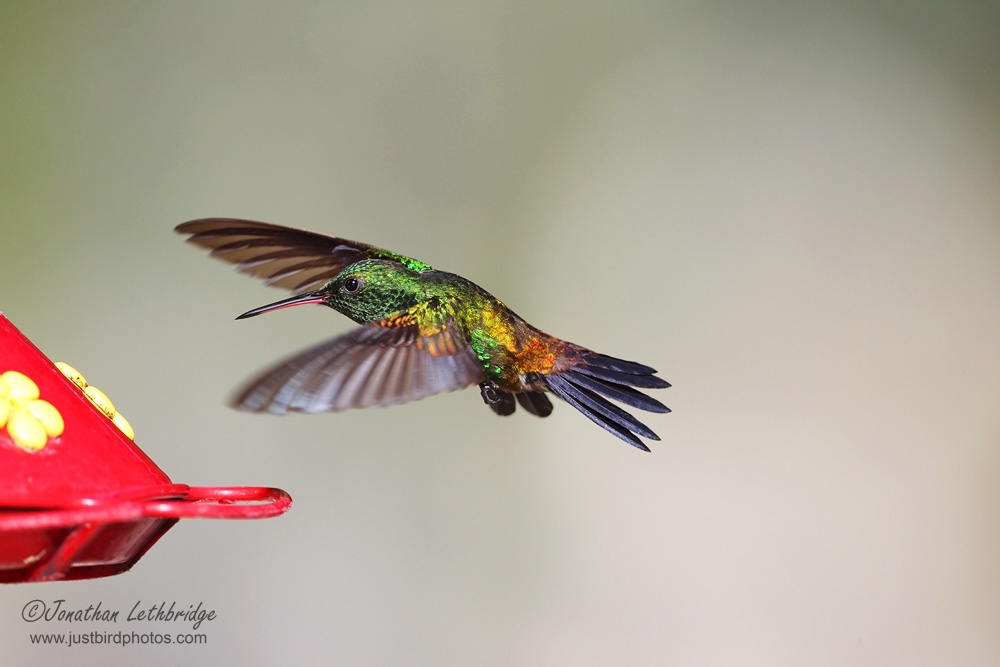
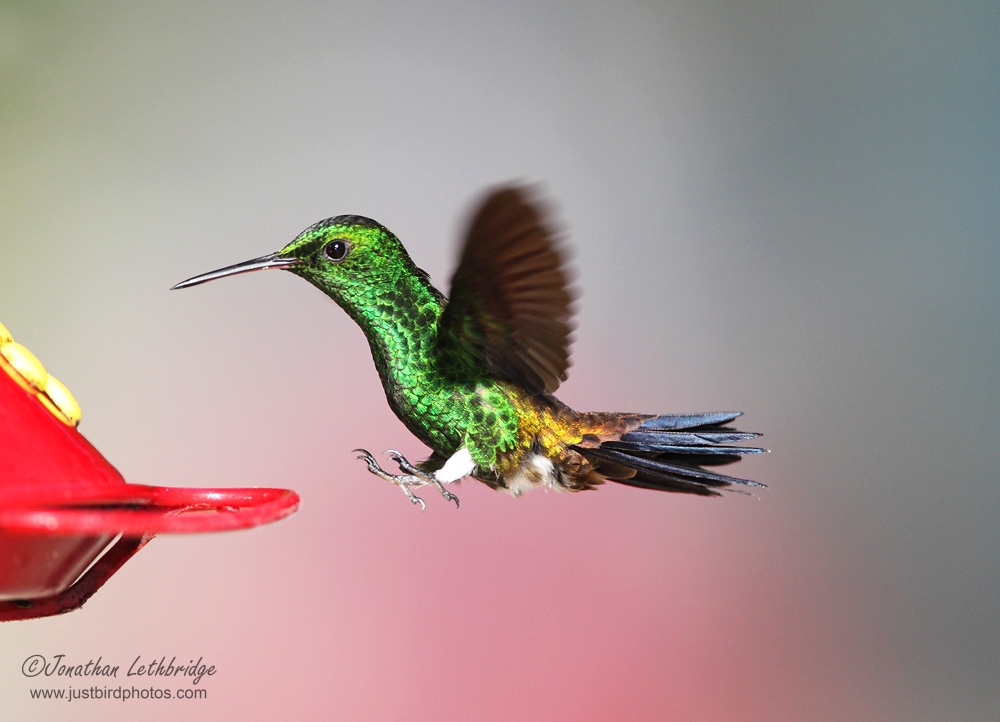
I set the camera to AV exposure mode, and the flash to on - on full power, although I used Flash Exposure Compensation to play around with the light - unfortunately the EXIF doesn't tell me what FEC was used, only if the flash fired or not. I used the centre focus point only, and waited for full sun to hit the feeder to achieve a high shutter speed. When focussing, I aimed for the head - having the eye of the bird in focus is 100% essential in all types of bird portraits. I tried to set an aperture of smaller than f5.6, but more often than not was forced to come back to f5.6 to get a decent shutter speed that I hoped would freeze the wings - it never did. Apparently Hummingbird wings won't even be frozen at 1/8000th of a second, so my puny speeds of 1/2000th were hopeless. Not knowing this I perservered all week! Then it was a matter of focussing on the feeder, and hoping that a bird would hover to the right of the feeder momentarily before alighting to have a drink. This didn't happen often, and usually I screwed it up. You can see the feeder in the above photo - note that it's possible in Photoshop or similar to completely erase the feeder from any photo if you have a nice even background, but that it's best (and less time-consuming!) to aim further out to make that unneccessary. My background was a path; I would have loved a nice green hedge, but the path was all there was - any other shooting angle and I had the walls of the hotel about a foot from the feeder and a diffuse background was completely impossible. In the penultimate photo in this sequence, the partially blue and orange background is another hotel guest walking along the path about ten metres away - you take what you can get! This is another reason to use a completely bespoke set-up if you can, as you can control every last element of the scene. I used my 800mm lens for every shot. It focusses unbelievably quickly, a triumph of engineering. Similarly, my EOS 1D Mark IV body is one of the quickest there is. Hummingbirds however are quicker - a lot quicker!! More often than not, around 99% of the time, the photo was a blur, despite the quality of the kit, it just could not lock on quick enough. I tried manual focus, essentially presetting a distance and hoping, but at minimum distance and at generally maximum aperture, this never worked, so I returned to autofocus. Occasionally it worked, and what follow are the best results - where the camera locked on, where the speed was adequate, where the flash mostly fired, and where the wings didn't obsure the head - this latter is pure unadulterated luck!
The most pleasing moment of the entire holiday was when I realised I had actually nailed the Rufous-breasted Hermit. The dominant species of Hummingbird is the Copper-rumped Hummingbird. These were constantly round the feeder. By contrast the Hermit came in three times in three hours, and each time was chased away by the Coppers. The first two occasions I blew it and was gutted. The third (and last) time, the gods smiled, and one single image, the one immediately below, was basically spot on. I was completely elated! I've seen a couple of photos on the web I think are better, in particular the work of Glenn Bartley, but without all the flash malarky, I'm more than happy. Ironically enough, one of the last bits of repacking I did was to remove a slave-flash, a venerable 430 EX, from my luggage on the basis I was taking too much stuff. How I wish I had ditched the macro lens - used about three times - and taken this instead. Next time, next time....
Rufous-breasted Hermit - 1/2000s, f5.6, ISO 800, EV +2/3, and heaps of luck.
Red-billed Tropicbirds
November 28, 2012
•
1 Comment
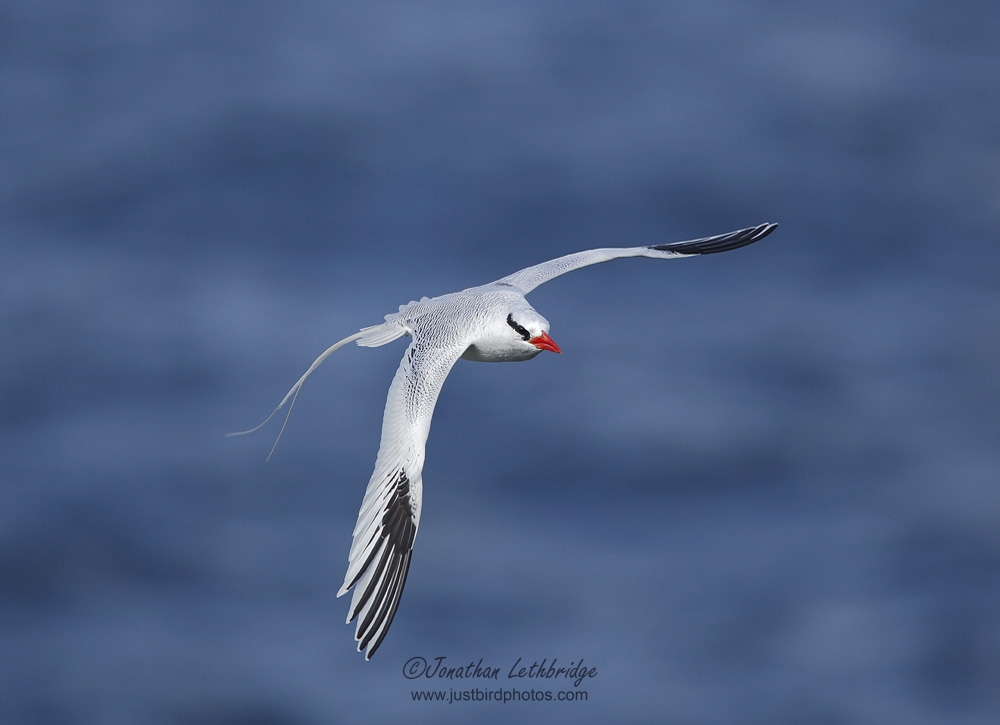
I've recently travelled to Tobago, not a birding holiday as such, more of a beach and rum, rest and recuperation kind of jaunt. Somehow a large camera bag slipped into our luggage, what can I say? I did spend a lot of time swimming, but I also managed to slip away for odd moments with my camera. One of those moments was a short trip to island of Little Tobago, which lies just off the east end of Tobago near the village of Speyside, where completely coincidentally our hotel was located. Do you believe in coincidences? I do.... The boat trip takes only ten minutes, and then you have a ten-minute climb to the very top of the island where a lookout has been created - the very spot from where David Attenborough filmed Tropicbird and Frigatebird sequence from The Trials of Life. Once there the view is staggering. Red-billed Tropicbirds in their hundreds, along with Magnificent Frigatebirds and Brown and Red-footed Boobies. It's the Tropicbirds that most people come to see, and I was no exception. Two tips - go in the afternoon when the birds come back from fishing - if you take the morning trip, the birds are out at sea. Also try and go on a day when there are very few people on the boat - the viewing platform is very small, and you will want it mostly to yourself to be able to pan back and forth. I actually went over twice - the first time I only had my 300mm lens, and whilst the birds are very close, I'm simply not skilled enough in flight-photography to get the kind of shots I dream of. So I went back, this time armed with the 800mm and a tripod (plus ball-head and Wimberley Sidekick - I was, ahem, travelling light...), to have a go at birds a bit further out which consequently cross the sky that little bit slower - perhaps even slow enough for me. I also decided to go with the Canon 5D Mark III, for it's supposed superior AF system - I need all the help I can get when it comes to birds in flight! Here are some of the results. Even though I clicked the shutter many hundreds of times, I was happy with only a handful of them, most of them from a single sequence where one bird came in on just the right line. A typical exposure was 1/2500 @ f7.1, at ISO 800 and with IS turned off (my 800mm lens has some kind of hardware clash with the 5D Mark III body which I have yet to get fixed, and which causes the IS system to shudder). I have the mother of all editing tasks on my hands at the moment, so I may yet find some more that are OK.
|