|
This page will act as a photographic journal. What I'm using, why I like various bits of kit, how I set up certain shots. Stuff that on the whole would act as a massive turn-off for anyone not interested in wildlife photography. Carrying a large telephoto lens in the field
November 04, 2012
•
5 Comments
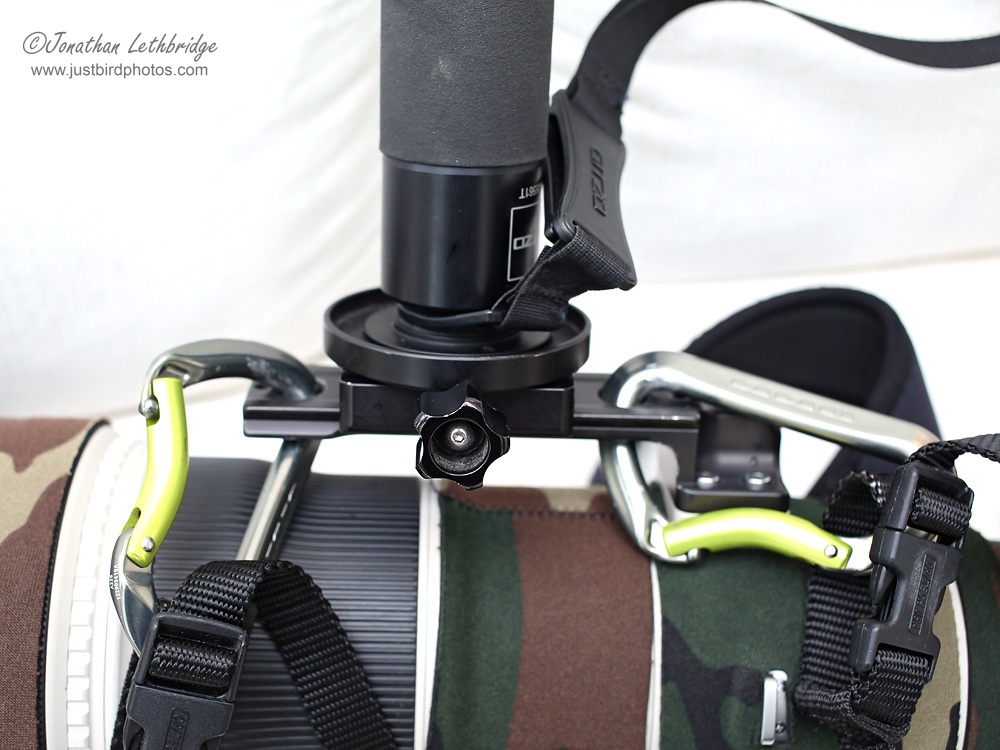
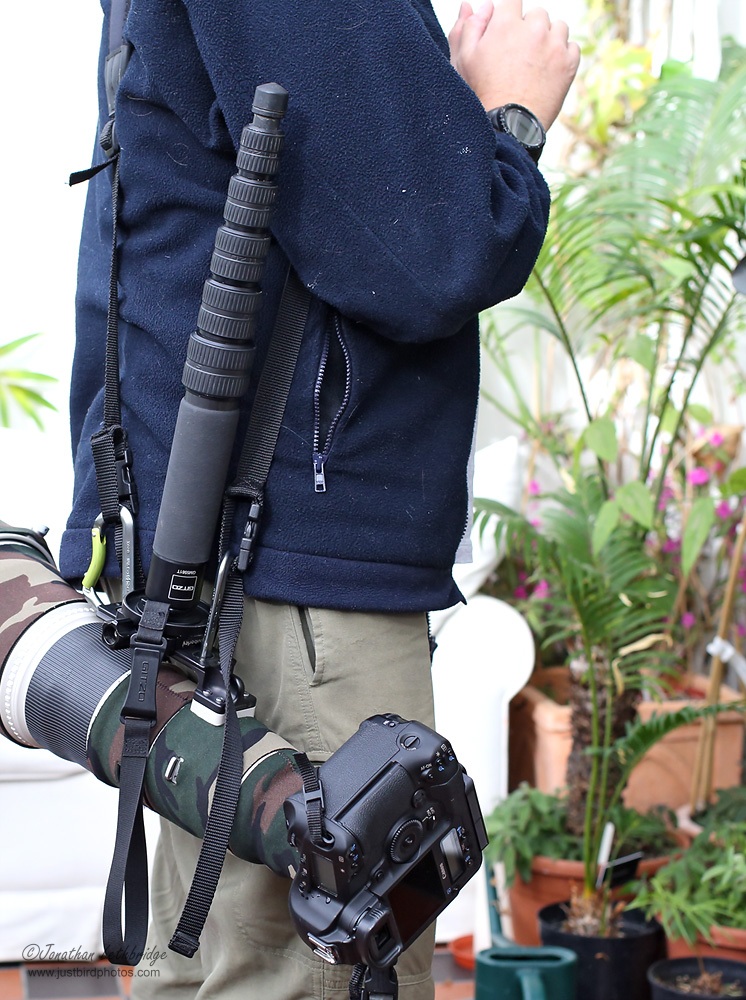
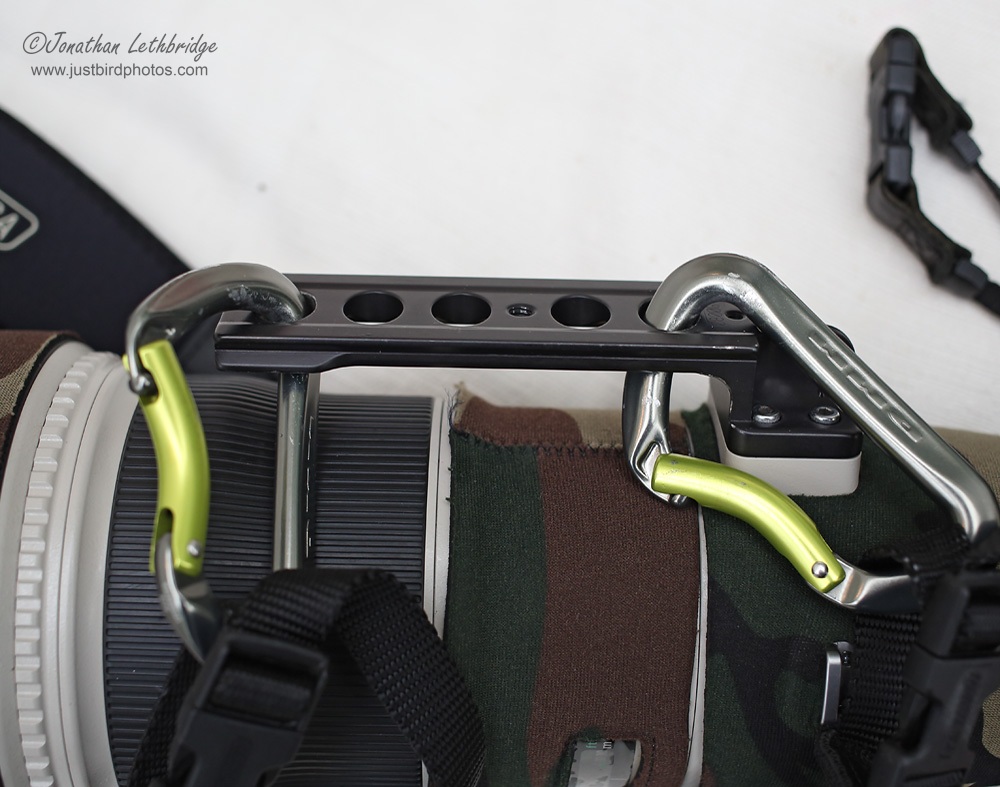
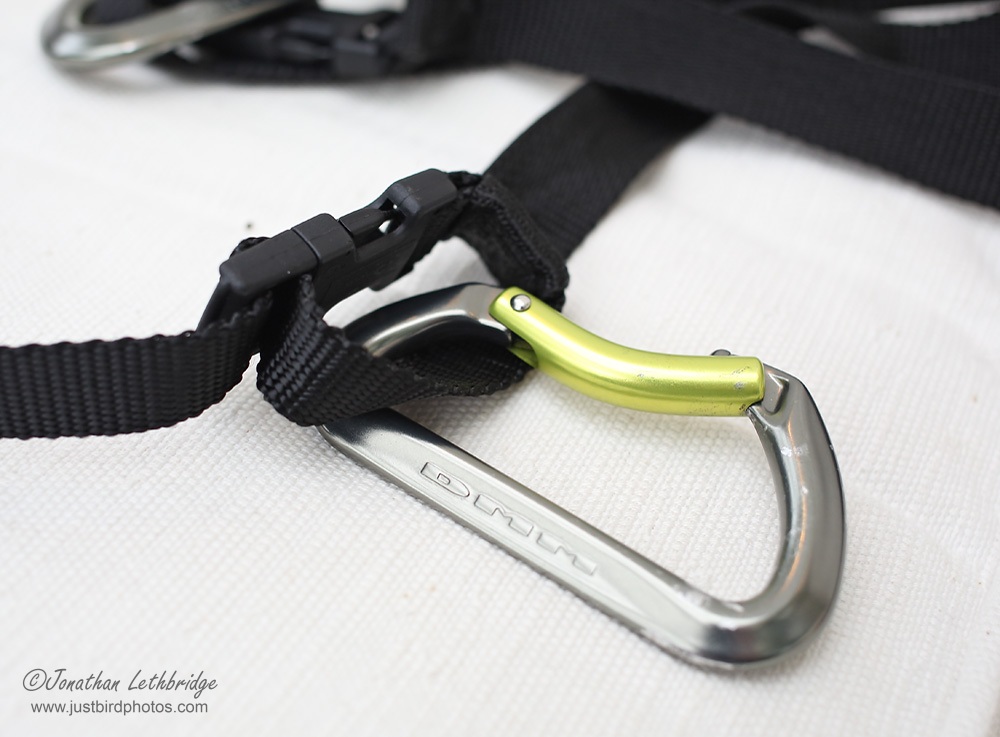
I've finally found a comfortable way to carry my camera - this has only taken me ten years! I refuse - most of the time - to carry a bag whilst out and about. My style is all about birding with a camera, not going out on photo-only missions (though that has been known, of course). I've always struggled to carry what is quite a heavy setup (~6-7.5kg). For a while I used a Sco-pac, of the sort designed for Telescopes mounted on tripods, but then I discovered that it was stressing the seams, and anyway I don't like tripods. Abandoning that, I carried the lens hanging off my shoulder, with the camera mounted - note that I attached a strap to the lugs on the lens collar, and did not use the camera strap as this would apply far too much pressure to the lens mount. This was kind of OK, but 500mm (and longer!) telephotos with hoods attached are so long that this bashed against my knee as I walked, and also put severe strain on my shoulder, what with the weight being in a narrow plane. The taut strap rubbed against the camera body, and managed on two occasions to ping a button off the top plate of the camera, literally snap it right off. The second time it was the ISO button, and £195 later I decided enough was enough. Finally I have the answer, though it is slightly Heath Robinson and requires a new lens foot. Here's what I used. - an OpTech cushioned tripod strap - 2 heavy duty climbing carabiners - a "4th Generation Design" replacement lens foot
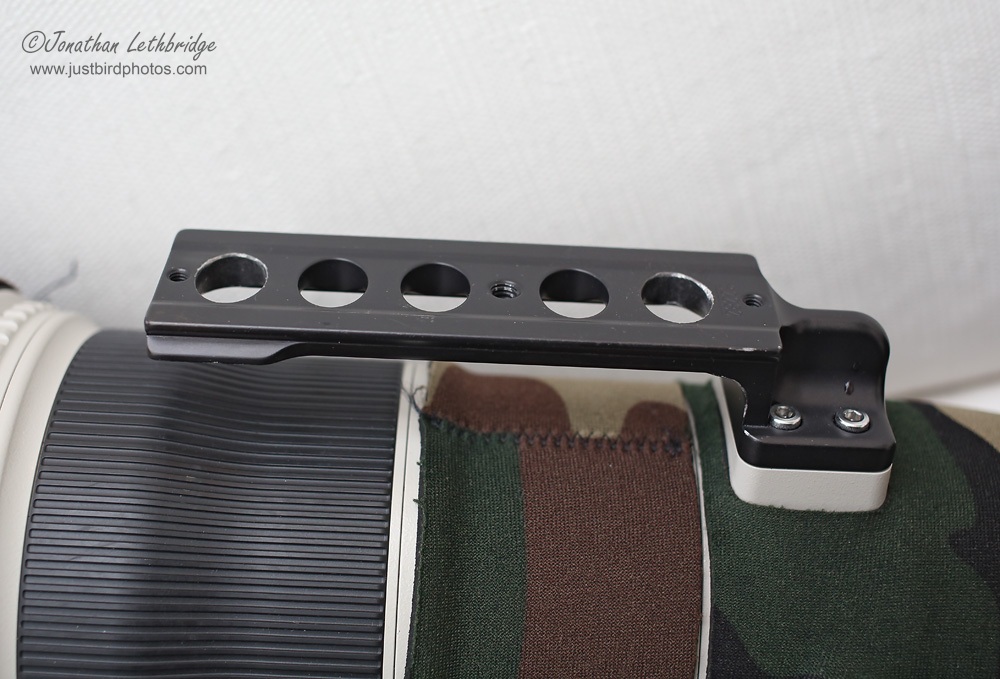
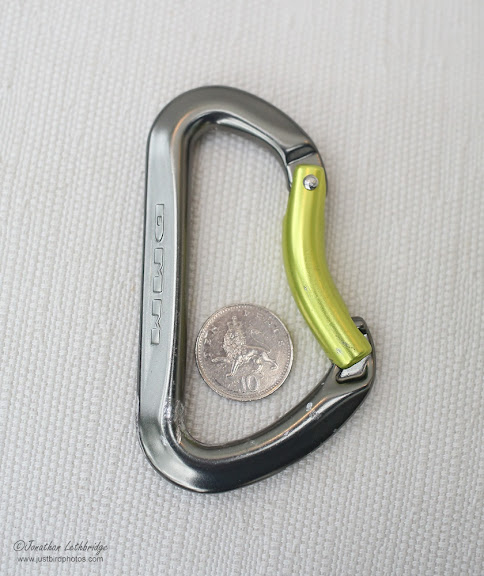
I can carry the setup all day long like this, it is brilliant. The camera and lens can hang either completely horizontally, or, as in the photo above, at a slight angle. Either is extremely comfortable, and leaves both hands free for binoculars or another camera. As you can see, there is enough room between the two carabiners to keep the monopod attached to the lens foot. The clamp is a Wimberley C12 screwed directly into the monopod; I don't believe in monopod heads. My monopod, a Gitzo GM5541T, is short enough fully retracted (as shown above) that it does not get in the way of my arms too much, and even when extended, it tends to point away from my body. The "4th Generation Design" replacement lens foot is designed to reduce the centre of gravity of your rig, as well as shave several hundred grams off it - which is why it has the holes in. It's made of high grade aluminium, just like Wimberly, RRS and Kirk plates. It's nicely anodized, and my new set-up is scratching the hell out of it! Note that the lens has a neoprene cover, and this prevents any paintwork loss - otherwise it would be metal on metal, and whilst it wouldn't affect the lens at all, scratching and paint loss could easily impact its resale value. Anyhow, why more people don't use these replacement feet I don't know, presumably it's the cost and hassle of getting it sent from the USA, but the weight saving is great. I'd never heard of them - when I bought my current lens it had one attached already - a happy discovery - and if I ever get any other long telephoto, I'll surely get one these feet for it - the Arca Swiss dovetail design is built in (see photo below), so that's the weight (and cost!) of a separate QR plate saved as well. They're made specifically for each model of Canon and Nikon lenses, you simply unscrew the original one and screw in the replacement one - easy. The carabiners are real ones, beware of a lot of fake rubbish on the web and order only from a proper climbing shop. These were about a tenner each, and could probably hold me. They easily hold the lens. The OpTech tripod strap needs no explanation, they're used by birders the world over. The loops in the strap that would go around the collar of the tripod at one end, and round one of the legs at the other simply go through the carabiners. Note that these carabiners have a slightly irregular shape, this seems to help the rig hang in one place - they kind of have corners that the weight drops into. You could go for screw-gate carabiners for extra safety, but I like the flexibility of being able to quickly snap the strap on and off. When you're moving around with the camera and lens hanging from your shoulder, gravity ensures there is no possibility for anything to come unclipped. My only slight worry is that the OpTech plastic clips in the loops are a weak link. The strap capacity is far more than what I am using it for though, so my assumption is that I'll be fine, and indeed so far there have been no nasty incidents and close inspection of these clips once in a while confirms they're still rock solid.
Desert Wheatear
November 03, 2012
•
1 Comment
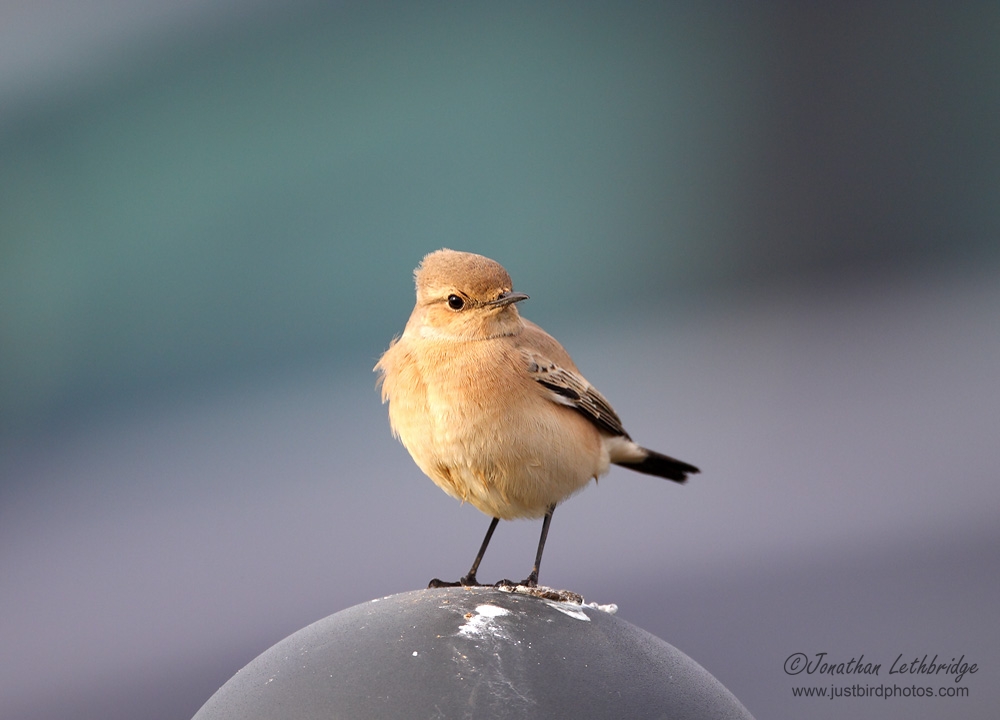
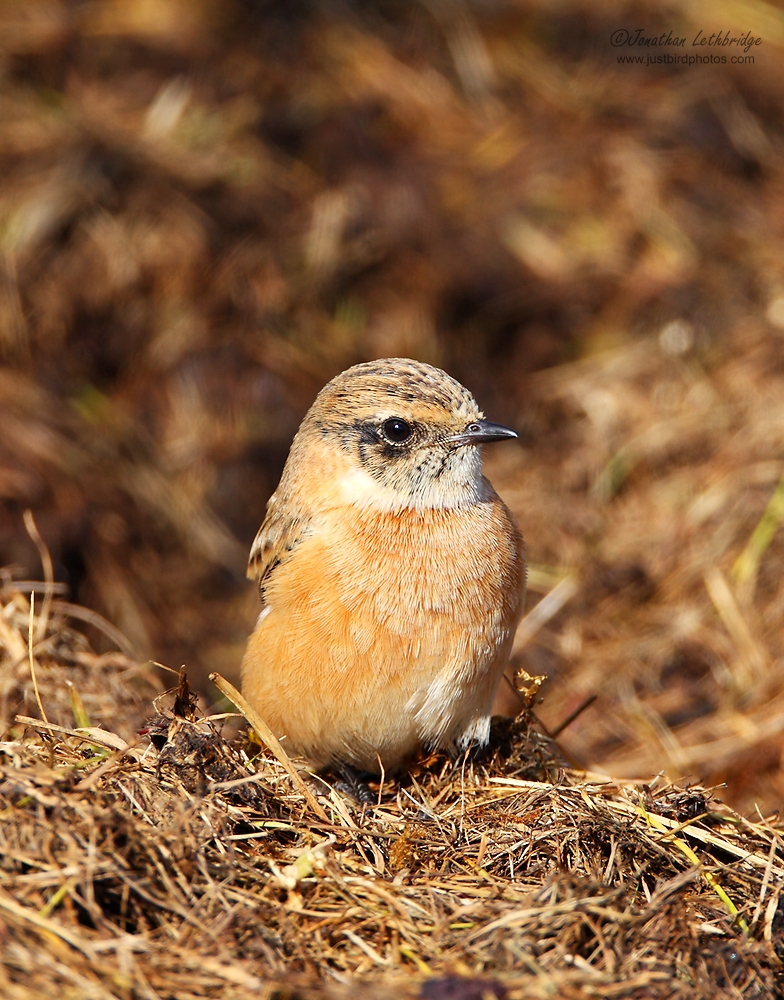
Every now and again you get an amazingly confiding bird, a rare event but a complete privilege. Today was one of those days, and the Desert Wheatear at Abberton Reservoir in Essex performed magnificently for all comers. I'd been waiting all week to get out there, mainly as it was an Essex tick, but also knowing how confiding they can be sometimes. Saturday came and it hadn't done the Friday night bunk, so forsaking the patch I went straight there. Too many people, and many of them hanging back for some unknown reason - this often happens even with stupidly tame birds, people are so scared of being labelled as flushers, or even worse - photographers! - that they don't want to be seen to make the first step closer. In the event the bird made the decision for them, and for me, by approaching the crowd so closely that those with large telephotos could do nothing but watch it hop around within minimum focus. I had bins round my neck and never even used them - birding as it should be! The light was OK (the sun even came out once or twice), the bird was ace and then some, the crowd knew they were onto a good thing and so stress-free, and over the course of an hour and a half I had a brilliant time. 657 shots taken, 190 retained in the first cut, 24 in the second. The best (or what I think are the best at any rate) are in the Thrushes and Chats gallery, and some of the rest are here. All were taken with the Canon 1D Mark IV and the 800mm f5.6 lens on the monopod - quite often at the absolute minimum focussing distance of six metres - I should have brought my extension tubes!
Harbour Auks
October 19, 2012
•
Leave a Comment
Shetland was incredibly difficult for photography, with high winds and generally poor light being the two largest factors working against me. My keeper rate was incredibly low over the course of the week, indicating that I should have perhaps been a lot more selective about when to press the shutter and when not to have bothered! Two weeks later and I'm still editing! This series is of various Auks in the harbours of Lerwick and Scalloway - presumably the birds were sheltering from the raging conditions. I should probably have been doing the same thing with a nice cup of tea, but for me it was a week of pure birding and photography - these don't come around too often so by and large I went out whatever the weather, making the best of a bad job. These ones, the first three of a Black Guillemot, and the last two of a Common Guillemot, are pretty much the best I could manage in some brief moments of sunshine. I actually got some decent shutter speeds at relatively low ISOs - 800 for the most part. As usual all were taken with the Canon 800mm f5.6 lens and the 1D mk IV body, which I lugged around day after day safe in a waterproof sleeve thing. This pretty much precluded manual focussing as I couldn't operate the ring accurately through it, but without it I would have been sunk, and forced to leave the rig in the car a lot of the time.
Siberian Stonechat
October 10, 2012
•
1 Comment
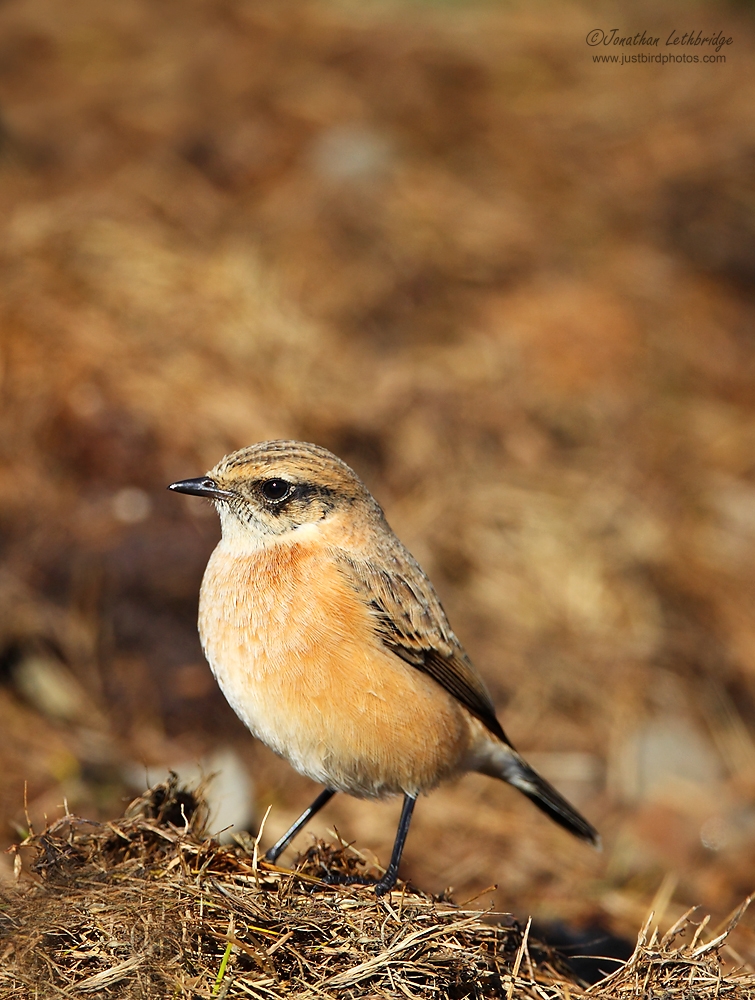
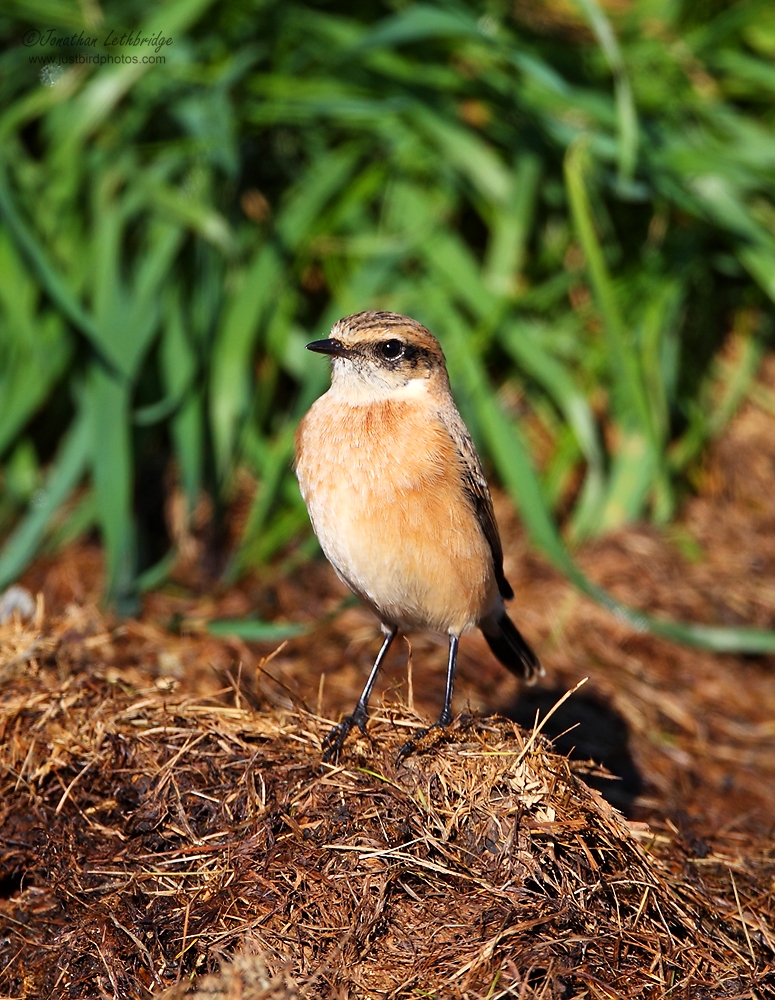
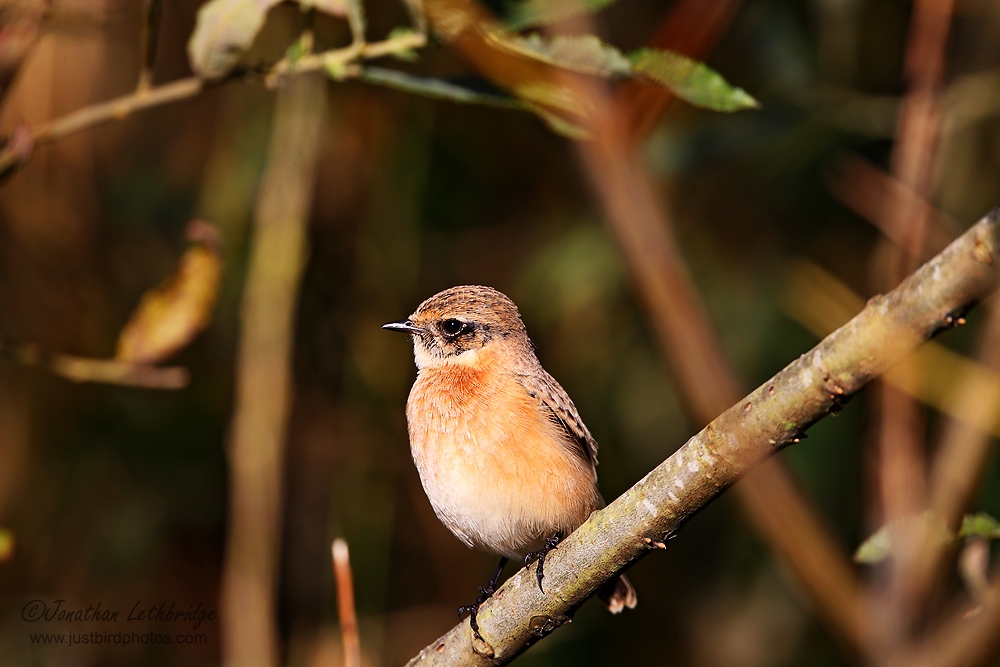
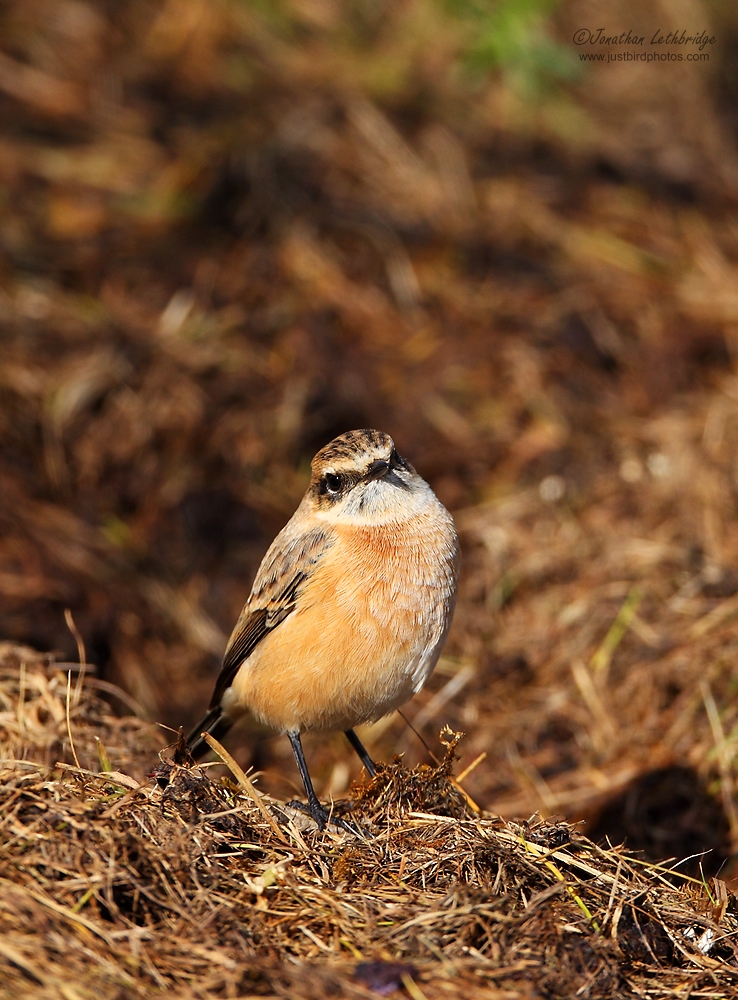
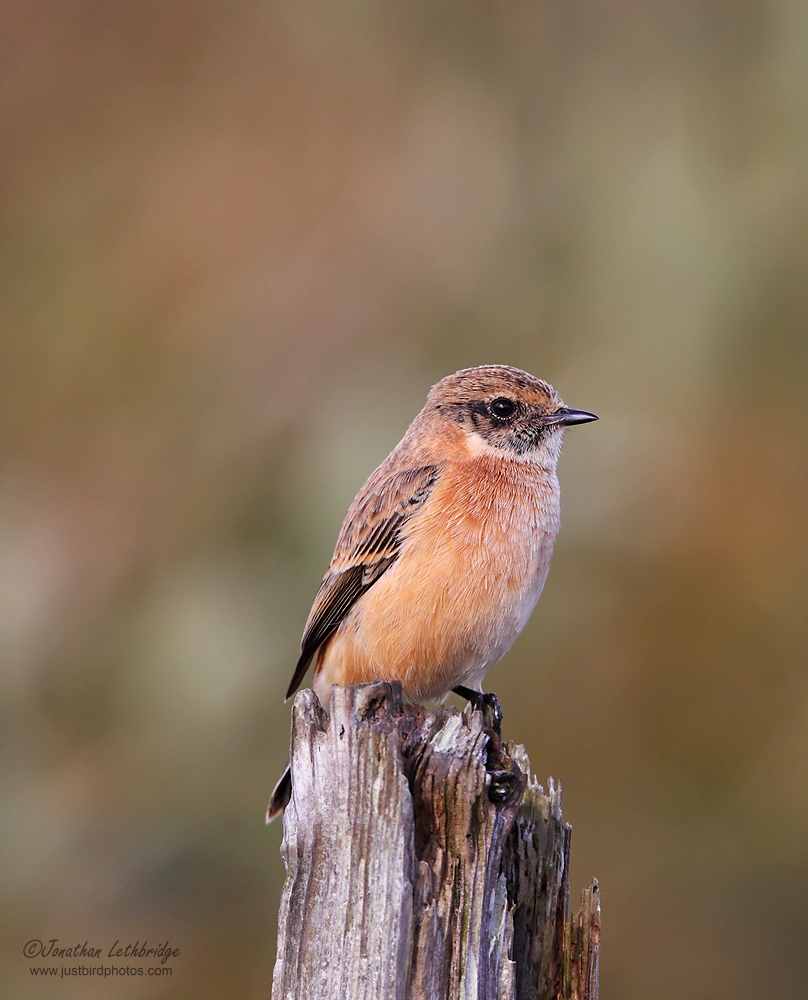
I had had OK views of this little stunner a couple of days earlier, but in quite harsh light and not very close. I was amazed to discover a few days later than some enterprising soul had put out a small tub of mealworms and erected a perch just the other side of a small stream. The bird was showing brilliantly, the sort of close you dream of if you carry a large white lens around for little reward day after day. I quickly texted Mick, another keen bird photographer up on Shetland, to tell him the good news. He turned up a little while later, not having received my text message, but clearly in the know about the perch and the worms, and began to set up. I gestured to the Stonechat, sat mere feet away, and said something like "Whoever did this deserves a medal!" He looked surprised. "It was me!" he said! "I did it this morning, and just popped back to see if it was working, looks like it is!". I showed him the texts I had sent.... Anyhow, a brilliant little bird, so full of character, and although not the best light, the four photographers present had an awesome time. I wish I could have stayed longer - Mick was there for another week so check out his webpage later for are bound to be fab images - but there were more birds to be seen. All images with the Canon 800mm lens and 1D Mark IV body, wide open at f5.6, using ISO 400 with shutter speeds ranging between 1/800 and 1/2000. The final image is with the 1.4x converter attached (for f8), and all used a monopod or tripod bar the penultimate image of the bird perched in twigs. I thought it had gone and had packed up, only for it to suddenly reappear - no time for support, just grab and fire!
Spotted Flycatcher on Shetland
October 07, 2012
•
Leave a Comment
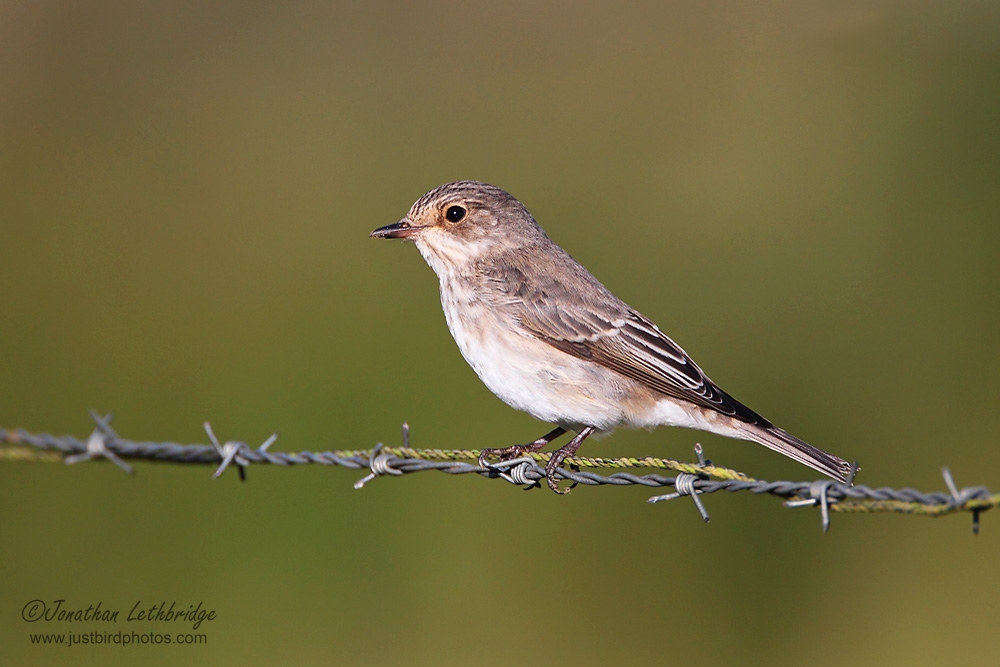
came across this fairly confiding Spotted Flycatcher on the track above Quendale Mill on Shetland. It seemed to want to remain very close to a ruined building, and was working the fence line on either side of it. It never allowed a point blank approach, and if I didn't move neither did it, so I had to inch my way up and down. I probably spent about an hour with this bird, and whenever it reached a point on the fence it judged to be too far away from the building, it would simply fly around me and start at the other side again. The light was excellent, quite unusual for Shetland, so I was able to use some decent shutter speeds which ensured sharp pictures. My favourites are the ones that are slightly against the light, causing a small amount of backlighting. I could have stayed for another hour, but the guys I was with are not as obsessed as I am. All photos were taken with my 800mm f5.6 lens and the Canon 1D Mark IV body. A couple of them also had the 1.4x converter in place - can you tell which ones though? I reckon I can on all but one!
|