|
This page will act as a photographic journal. What I'm using, why I like various bits of kit, how I set up certain shots. Stuff that on the whole would act as a massive turn-off for anyone not interested in wildlife photography. Stonechats return to Wanstead Flats
September 23, 2012
•
Leave a Comment
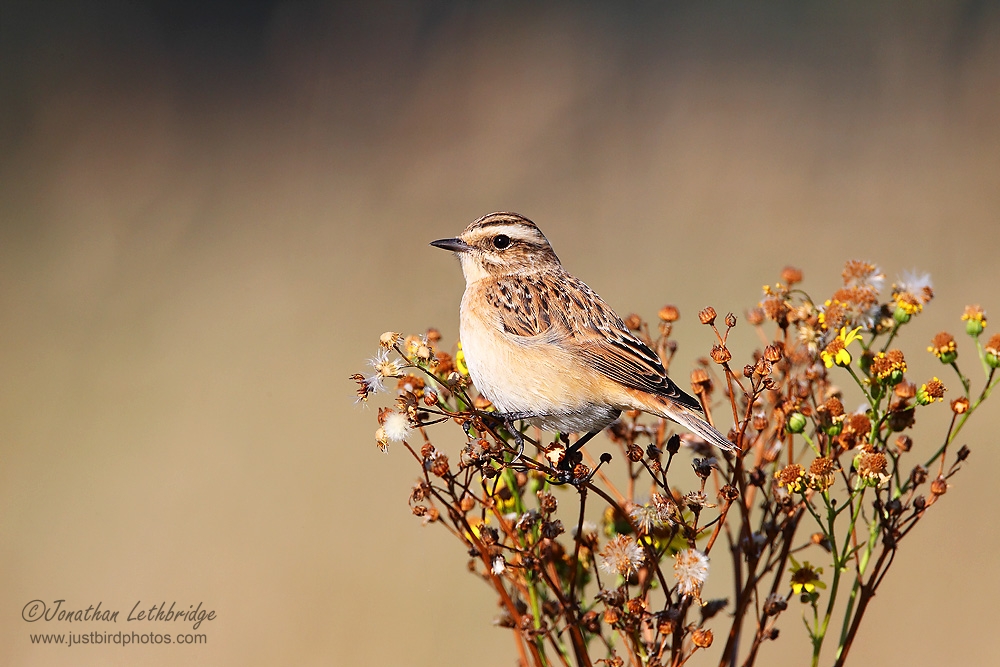
Stonechat used to be a regular wintering bird on Wanstead Flats, a January 1st banker. Not so for a few years now, so it's good to see a couple of Stonechats back. Whether they stay or not remains to be seen, but for now it's another bird to chase round trying to get photos of. If anything they're even more wary than Whinchats though, which means getting close has so far proved to be impossible, on foot at least. The two birds are together as well, which makes it even more difficult. However they do come quite close to one of the carparks, so with patience it may be possible to get them from the car. I could get out my camo net I suppose, but although in theory it's a great idea, in practice it doesn't really work in a public place, and is more hassle than it's worth. Light levels today were awful, and with the converter on in order to get at least some pixels on the bird, I really struggled with shutter speed at f8. Even at ISO 800 I could only muster 1/320s, which is not really fast enough, and sharpness has taken a hit. If the birds stay, I may venture out with a tripod to see if I can do any better, but there's nothing I can do about the birds moving!
Wheatear redux
September 21, 2012
•
Leave a Comment
Another day, another Wheatear. I really cannot get enough of these brilliant birds. Ask anyone who knows me what my fave bird is, and they won't hesitate. A spring male, generally the first migrant I see each year, mere words cannot describe my joy. OK, so this one is on the way back, but you get the idea - I like them. A lot. This series was taken once again on Wanstead Flats with my 800mm lens and a 1.4x converter. Just a monopod for support again - although I do have a tripod and gimbal, I am trying to get the shots I want to without using it, dumb though that sounds. It's all about weight and flexibility. If I'm on the Flats, I'm in birding mode. I want to able to move quickly, and have both hands free for my binoculars. Support is critical, but in addition to slowing me down, the tripod and head add a full 2.4kg on top of the monopod, plus take up a hand. I'm sure that as the year progresses and light levels decline, my shutter speeds will get slower and slower and I'll eventually find that there is no option but to switch to the tripod, but whilst I can continue to get away with it, it's easily my preferred method. Shutter speeds today ranged from 1/800s to 1/1250s, and whilst some (many!) shots were off, there were more than a few that made the grade. Damn I love Wheatears! Not looking forward to winter when there aren't any...
Whinchat on Wanstead Flats
September 19, 2012
•
3 Comments
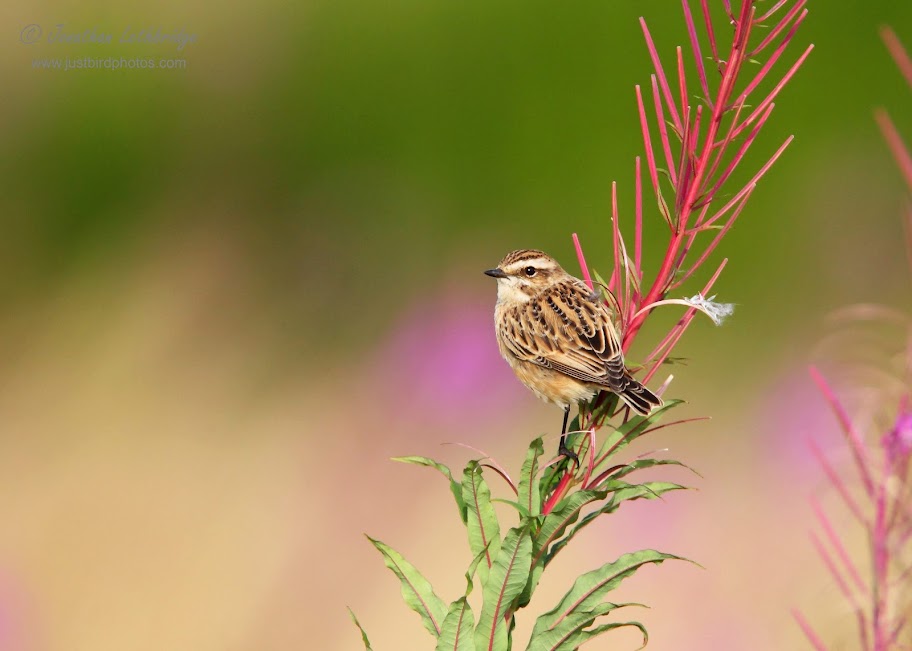
Got some gen from Nick, one of the regular crew, who said that he had been able to get within ten feet of a Whinchat in the scrub near the Golden Fleece Pub. Naturally when I turned up it flew off before I'd got within fifty yards, but with patience I got it down to about thirty feet or so. All these images are taken with the 1D Mk IV camera and the 800mm f5.6 lens + the 1.4x converter - some pretty crazy focal length with just a monopod for support, but did have to delete quite a few. Only the centre focus point is active at f8, which is a problem with composition - I couldn't focus and recompose as the wind was blowing the perch around all over the place. I used AI Servo and hoped the focus point landed on the head and that I got a good pose! All in all I took about 250 frames, of which I kept 30 and whittled it down to 5 for this post. It reaffirms my belief that focal length is key for small passerines, which means I no longer have any idea what to take to Shetland!!
300mm f2.8 IS with converters
September 11, 2012
•
1 Comment
My new 800mm lens is pretty enormous - enormous enough to struggle with budget airlines. It also precludes full-on birding, as you're simply not as mobile. I've discovered the hard way that if I hang the lens via its strap off my shoulder, then the strap with all that weight attached can catch on the buttons of the top plate of the camera. It happened a few months ago with the the Flash Exposure Compensation button, no great disaster, but last week it also pinged off the ISO button, and that I couldn't live without. In to Canon it went, and seemingly buttons are not replaceable so I ended up with a whole new top-plate at a cost of £200. I don't fancy doing that again so the new method is to have the lens over my shoulder, holding it via the monopod - think of a hod-carrier and you'll get the approximate idea. The camera is safe, but I only have one hand for my bins, and that isn't enough. With a trip to Shetland beckoning, which requires both budget airlines and full-on birding, the 800mm seems not ideal, but focal length is still key. So instead I'm turning to the 300mm f2.8 IS, the only other longish telephoto I have, and both the 1.4x and 2x converters - both of which are the latest mark III versions, though the lens is the older model. If it works as a viable combination I may upgrade to the newer model which is lighter, works more efficiently with the teleconverters, and has a better image stabilisation system. I took a walk around lunchtime to see if I could find a bird - this needed to be a real life example, not a test chart. All the shots are hand-held, and the body was a 5D Mark III - lots of lovely pixels! The first photo is at 420mm, 1/5000s at f4, and the second one below is at 600mm, 1/3200 at f5.6. Neither photo is cropped, so this is the actual difference in pixels on the bird that comes with the 2x converter. Both hand-held at ISO 400, so if slower shutter speeds are required on Shetland, as seems highly likely, my monopod is bound to come in very useful.
Thoughts on the Canon 800mm f5.6L
September 05, 2012
•
1 Comment
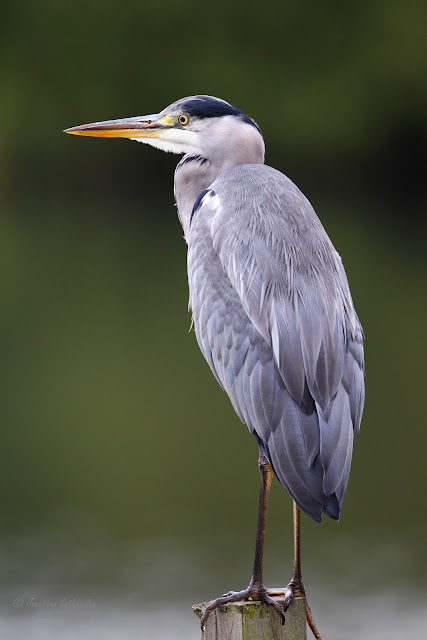
As people have maybe surmised, the reason for selling my 500mm f4 lens was that I had invested in something longer - an 800mm. I rarely used the 500mm without a 1.4x teleconverter, so it was a choice between 700 f5.6 and 800 f5.6. With bird photography focal length is king. 700 vs 800 may not sound like much, but it's a noticeable difference. Add to that the fact that the 800 would take the 1.4 teleconverter just as well as the 500 did, and retain autofocus with my camera, and it was a persuasive argument. The newer lens had better AF speed vs the 500 + converter, better IS, and was newer. Not that there was anything wrong with the eight year old 500mm - indeed my oldest lens dates from 1992 and operates flawlessly - but it's always nice to know that your kit is relatively fresh. The cons are half as much light, more weight (though this in fact a mere 400g), physically larger, and a longer mfd. I can get around most of these things. - Half the light. Not ideal, but high ISO performance on the 5D3 and 1D4 are amazing. I will happily shoot at 3200 on the 5D3, and 1250 on the 1D4. This would have been unthinkable a couple of years ago. Winter, however, will be the true test. - +400g. Any extra weight is bad, I already carry too much. But I no longer need a TC, and that reduces the difference to about 100g. I can live with that at the moment. - MFD 6m vs 4.5m. Not great, but rarely am I too close to a bird. I have extension tubes if it ever happens. I've had the lens for two months and used an extension tube once for about half an hour on a particularly obliging Little Grebe. - Longer. Nothing I can do about this, and this is the biggest downside by far. The lens is difficult to pack in hand luggage, it requires a much larger bag. With various pirates like Ryanair and Flybe imposing absurd limits on hand luggage for one reason and one reason only, I face a difficult choice when travelling. 98% of my photography occurs without recourse to a plane - easy really. The price for the 800 was right, and I felt that the 500mm would sell at a good price, probably at a peak whilst stocks of the new mk II lens continue to dribble in. This proved to be the case, and I was able to sell the 500 for considerably more than I bought it for - three years of 'free' telephoto happiness. So, what's it like to use? My first outing was very difficult, and I wondered if I hadn't made a big mistake. My keeper rate was down hugely. Despondent, I wondered what I should do. Easy, go out again. Gradually I'm getting used to it, and the results are proving - to my jaundiced standards at least - wonderful. There is truly no substitute for focal length. I've been getting shots that just wouldn't have been possible with the 500mm. I'm no pro, but I've been getting shots with the converter, using only a monopod for support, that are blowing me away. I've yet to use it with the tripod and Wimberley, I can only imagine that the step-up in quality will be sensational. Unfortunately that's not really my style as a roving birder, but no doubt I will test it out one day. I love the freedom of a monopod, it's easily the best of both worlds, the ideal compromise. Hand-held would be useless, but a monopod is discreet, easy, light, quick and versatile. Tripods are cumbersome, slow, heavy.... So, the photos. Well, all photos recently posted have been with the 800mm. I didn't even pick up the 500mm once I bought the 800mm....and last week I handed it over to a new owner. Pangs of regret certainly, it was the lens that changed everything, but I've got a great replacement. Winter may be a different story, but I'll cross that bridge when I come to it. The new 500 mk II is still in my thoughts, especially for travel, but the focal length advantage of the 800mm is a boon. Heron: 800mm, 1/500s at f5.6, ISO 800, monopod Sandpiper: 800mm, 1/800s at f5.6. ISO 400, monopod Whinchat: 1120mm, 1/1600 at f8, ISO 640, monopod
|