|
This page will act as a photographic journal. What I'm using, why I like various bits of kit, how I set up certain shots. Stuff that on the whole would act as a massive turn-off for anyone not interested in wildlife photography. Spectacled Warbler
March 10, 2013
One of our many roadside stops in Morocco was outside a town called Ouzarzate. Amongst the many birds there were a pair of Spectacled Warblers. I'd never seen this species before, let alone photographed it, and so once I was done with Wheatears, moved on to these. All with the 1D4 and 800mm lens - over 1000mm of focal length is massively helpful for small birds, even when they're as close as this bird was.
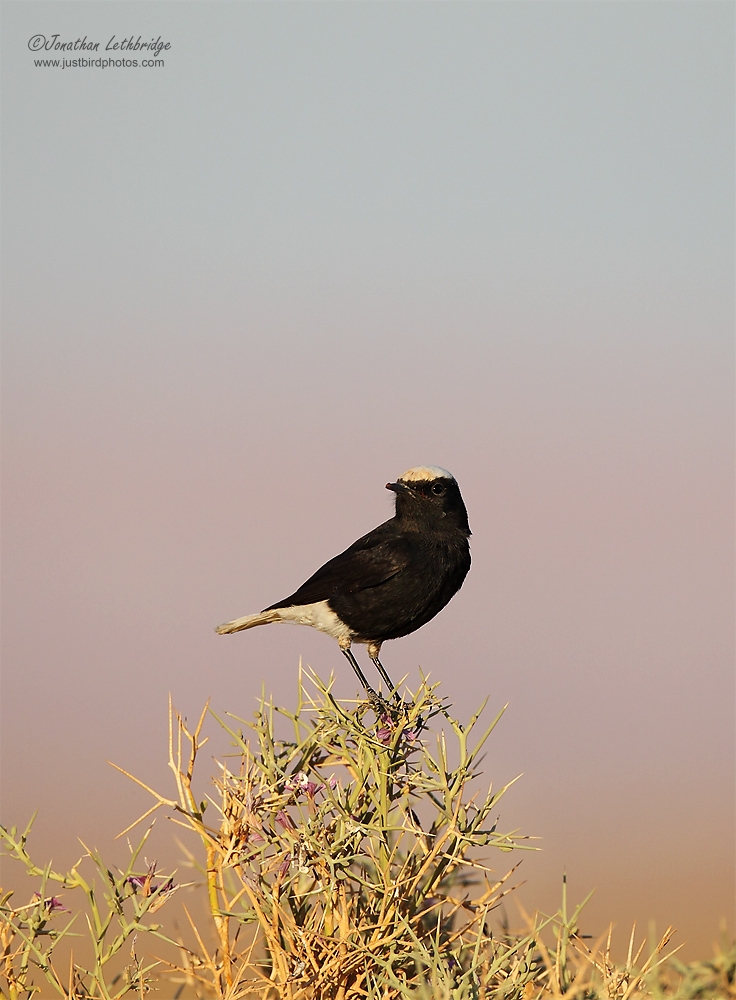
White-crowned Black Wheatear
March 08, 2013
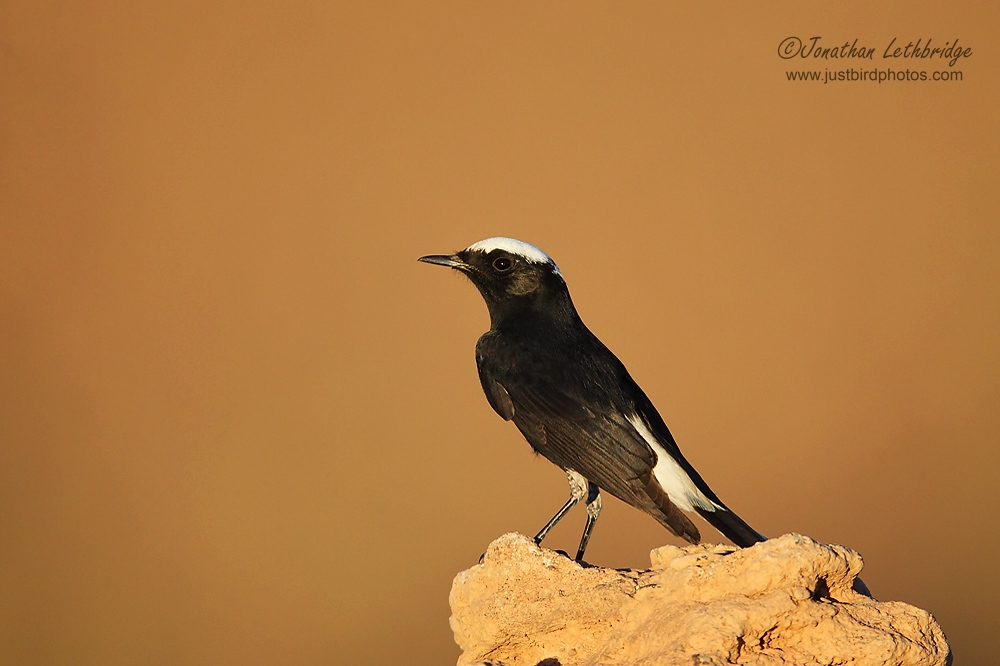
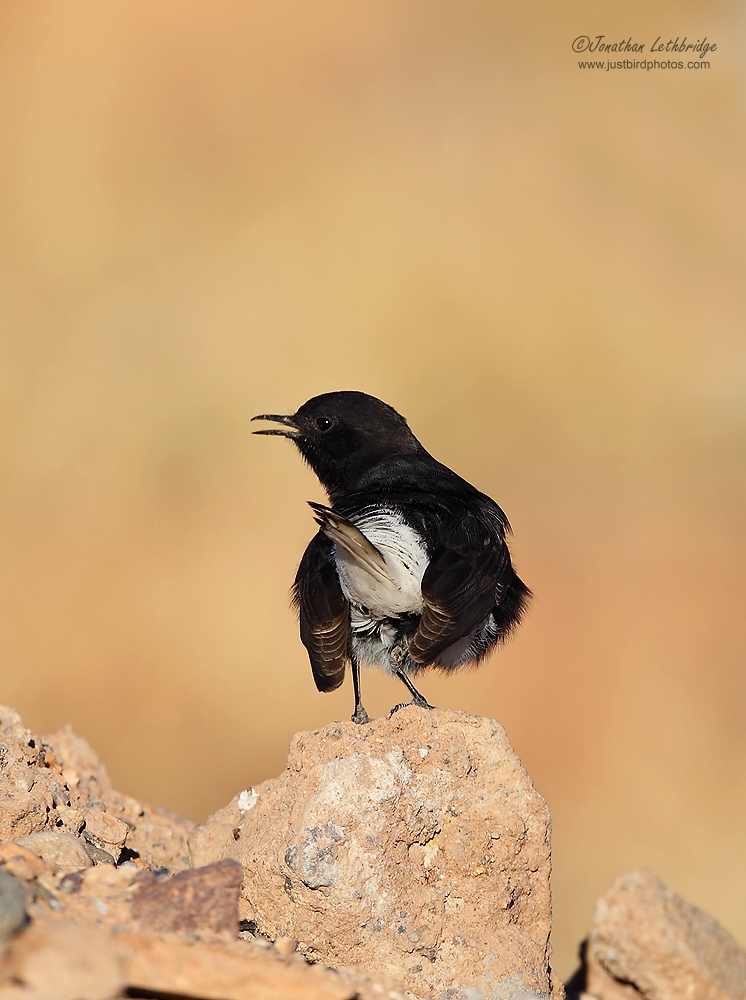
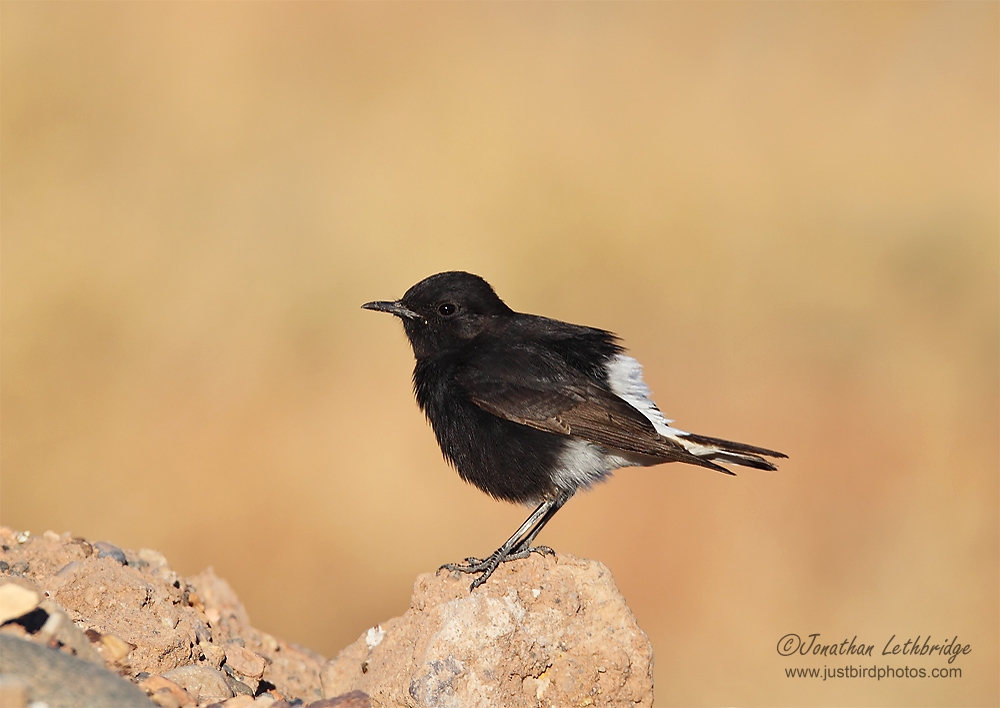
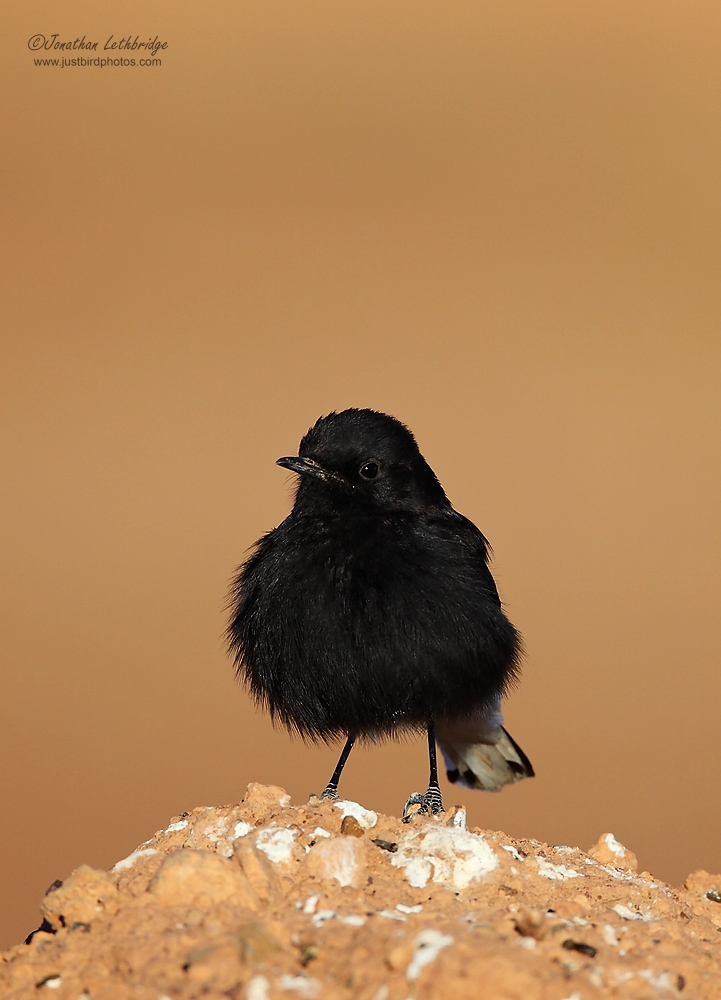
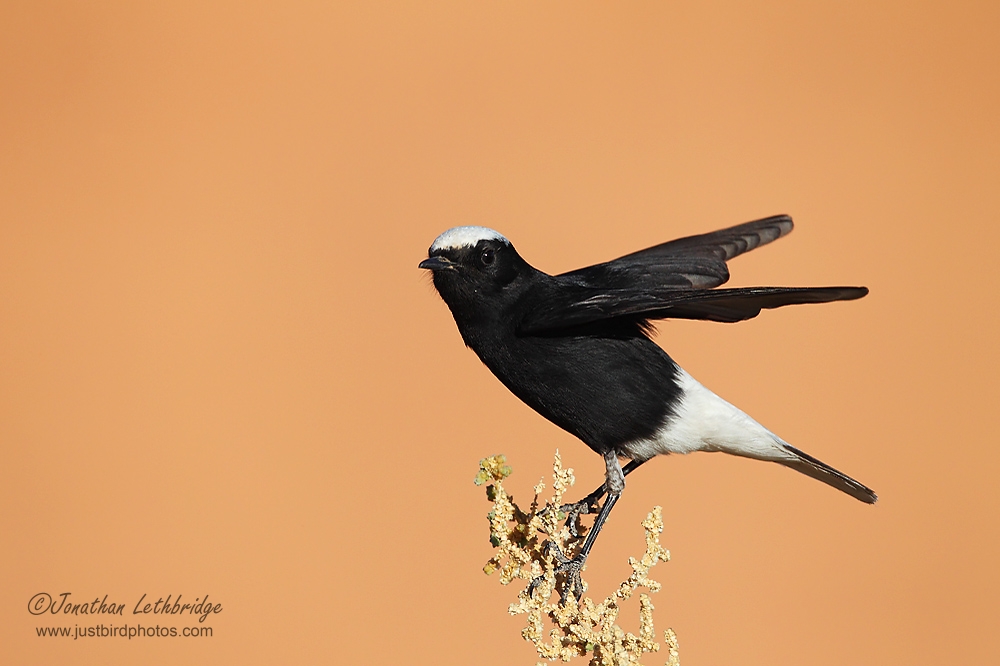
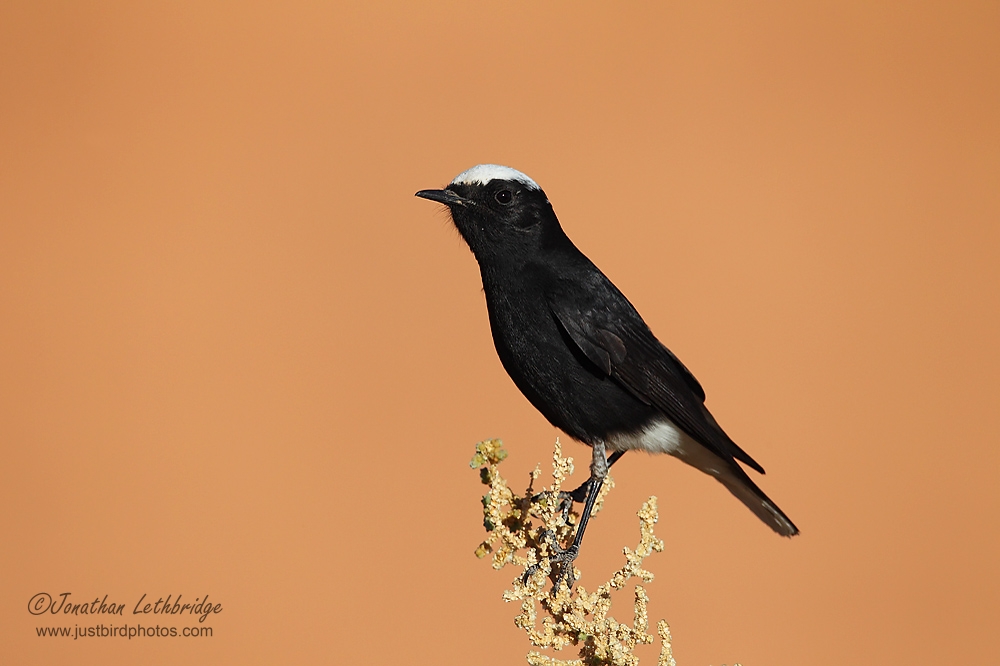
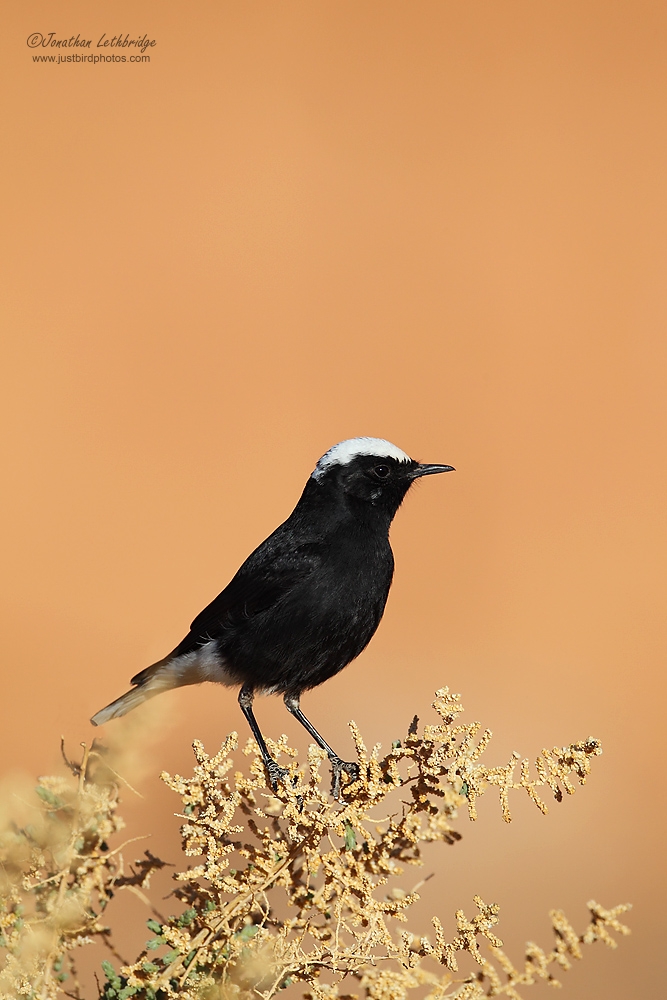
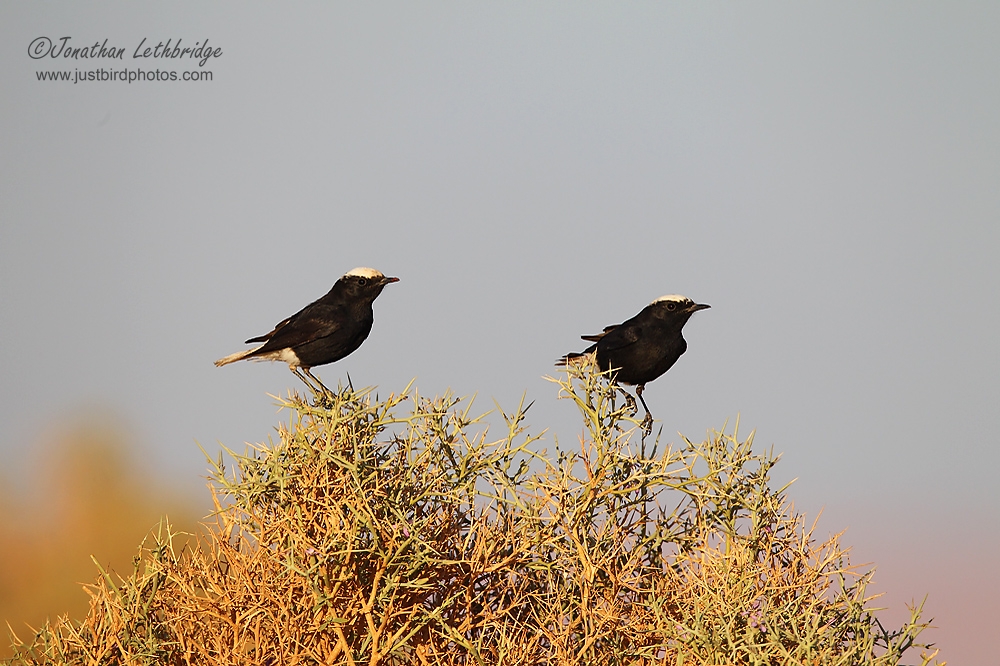
The default Wheatear in Morocco is the White-crowned Black Wheatear, Oenanthe leucopyga, and they are literally everywhere. You find them in towns as well as remote wadis in the desert. And it goes without saying that they are superb. They were also relatively easy to get close to, and we found we could pretty much pick a perch and sooner or later the birds would use it. The 800mm lens made light work of getting some really nice close-ups of these fantastic birds. One of first stops was near the town of Ouzarzate, where we found a pair. Using a bit of stealth I approached a bird, and was amazed when it then halved the distance and came and landed on a nearby rock to check me out. At that point I only had the monopod, but the light is so nice in Morocco that I could probably have handheld for this one - 1/2500s at f5.6.
For subsequent shots, I found that the best method was to mount the whole rig on a tripod, which I would then crouch behind, pre-focused on the intended perch and wait for the bird to come in. This meant I could then stop down to f8 or thereabouts. I used manual exposure throughout - the light is pretty constant out there, and it's far easier to control the whites than using AV. Canon's 800mm is a bit of a beast - heavy, unwieldy, and thus a pain to lug around, but for well thought-out shots of perched passerines it really is the business. I never resorted to a teleconverter, there was no need. Here are few of the many images of this species that I took during the trip. The first three images below are of a young bird - these do not have a white crown, and so look deceptively similar to Black Wheatear, Oenanthe leucura, but can be separated by tail pattern, and to a certain extent by habitat. The sexes are identical - on the photo with two birds I have no idea which is which!
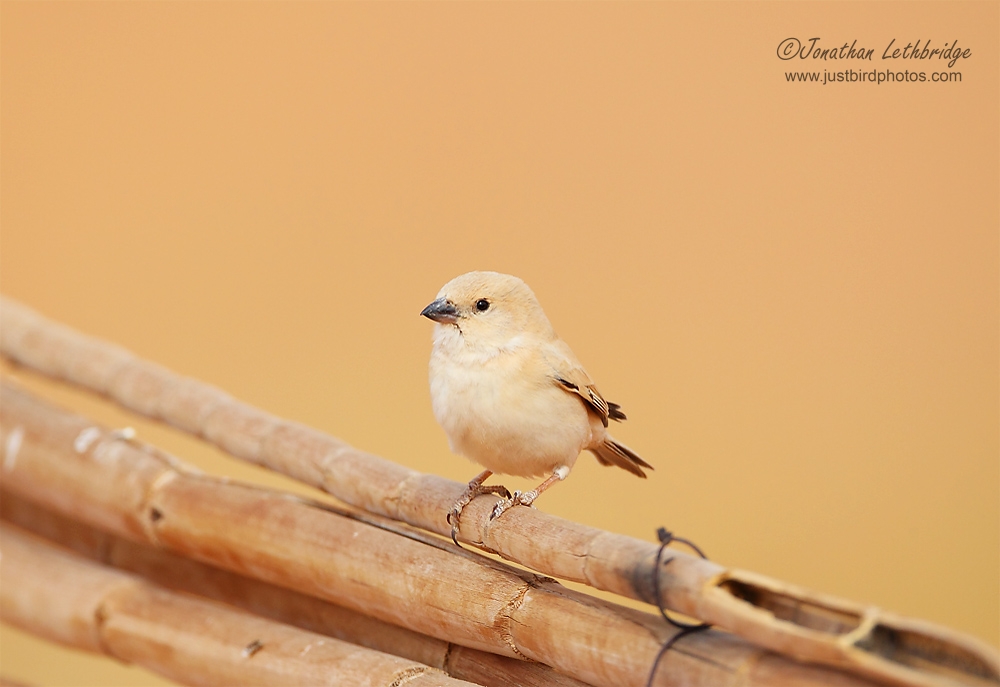
Desert Sparrow
March 06, 2013
I've just returned from a five day trip to Morocco, with most time spent in the eastern side of the country - where the real desert starts. One of the main targets for the trip was Desert Sparrow (Passer simplex), a true arid specialist. The Erg Chebbi, south of the town of Erfoud, is the most westerly part of the Sahara Desert, and has a spectacular dune system. In previous years small numbers of Desert Sparrows have nested at various settlements on the very edge of the Erg Chebbi, but they have recently been pushed out by House Sparrows and have retreated into the dunes. My companions and I really wanted to see these birds, so followed a camel track out into the desert. This afforded spectacular views as it wound up and down various ridges, before reaching a small Berber encampment, home to a family and their flock of goats. Although only about two miles into the dunes, walking on soft sand carrying a pile of gear was extremely hard work, and by the time I got back out I was exhausted. It was worth it though, and I'd do it again in a heartbeat. The birds were living in a small group of palms next to the Berber tents, and seemed to find much of their food in and around the dung created by the goats and the passing camels. We estimated that there might have been four or five pairs in the colony. Such smart birds, and so difficult to connect with - it's a long way to go from Marrakech to find them, over the Atlas and out into the middle of nowhere. Somewhat of a sea change from Wanstead! Here are a few images, both of the birds and of the scenery we had to trek through to get to them. A fantastic experience!
Wimberley are Great!
February 27, 2013
•
Leave a Comment
Wimberley makes great products. However, many companies make great products, so how do they distinguish themselves from the competition? How do they stand out? For me it's all about customer service. I've used Wimberley products for a long time - lens plates, arca clamps, macro arms, and of course their famous gimbal tripod head. None of it has ever gone wrong before, and so I've never had cause to contact the company. Then last October I detected a wobble in the tripod head. It had been a while since I last used it, and after the Siberian Stonechat on Shetland I then didn't use it again until the start of 2013, and so promptly forgot about the wobble and continued using my monopos - which by the way has a Wimberley clamp atop it. This year, when I decided I'd try and take my photography to the next level, I turned to my tripod as one way of perhaps helping me make that step. The wobble was still there - it could be eliminated by locking down the whole head, but when you wanted to pan, back it came. Annoying, and I needed to solve it. I contacted Wimberley directly, and explained the symptoms. They wrote back straight away, asking a few questions, and also where I had purchased it, the serial number and that kind of thing. The serial number was easy, but where I bought it, had I filled the waranty document in - not a chance. I hadn't the faintest recollection of where I got it, nor could I find any paperwork. No matter, said Wimberley, we stand by our product. They would send me, they said, a new central screw and washer set that their technicians felt would fix it. Gratis. With no proof of purchase or anything. Furthermore, if it didn't fix the problem, all I had to do was to send the whole unit back and they would simply replace it. Just like that. I mean, these things cost £500! So today I was pleased to find a small and neat package on the front door step. Inside was the promised screw, and the two washers along with a step-by-step guide to performing the repair. Also very helpfully a complete parts diagram of the entire head. It took five minutes to whip out the old screw and washers (which by the way looked identical to the new ones!) and replace them with the new ones. A couple of minutes to adjust the tension and I was all done. Wobble gone, smooth panning back. Fantastic. I have no doubt that they would have sent me a brand new head had I needed it, but it wasn't necessary and I'm back in business with a fully functional head. The whole process, start to finish, took no more than a couple of weeks - Wimberley are based in the US. I am what they call a satisified customer.
Here's a photo of a Wimberley head in action from the weekend, with fellow London photographer Mick S behind the camera. If you see somebody with a long lens taking photos of birds, they are almost guaranteed to be using a Wimberley. Lenses that are pain in the backside to carry become completely weightless, it's a fabulous bit of kit. There are various knock-offs available, various copies and slight alterations on the design. They might work, they might not. But what of the customer service? Will it be quite as good? I very much doubt it, and that's why I'll always use the real deal.
More of that Fieldfare
February 26, 2013
•
Leave a Comment
Couldn't resist a few more of the Fieldfare - a lovely bird and one of the best Thrushes. Almost impossible to get close to normally, so this was a real treat for me. If you ever find an obliging one, get to work on it immediately as these opportunities are highly unlikely to occur! As usual I was working with Canon's superb 800mm f5.6 lens, mounted on a tripod and with a gimbal head. Prior to this year I probably took most of my photos either handheld, or using a monopod. I've waxed lyrical about the benefits of a monopod many times, and the portability and flexibility is hard to beat. Nonetheless, this year I've used a tripod far more often - mostly as a function of the low winter light levels. I have no idea if the tripod explains it, or whether I'm just thinking much more carefully about the shot, but I feel that my photos have improved this year. Just a coincidence? I'm not sure, but I'm thinking that it probably isn't and so plan to use my tripod as often as I can. I do currently have an issue with the Wimberley though - it wobbles when not completely locked down, so I can't pan very easily. The company are being very helpful though, so I'm very hopeful of getting full use of it back soon.
|